After enjoying a traditional Irish breakfast at the Dillons Hotel in Letterkenny we explored the town. The hotel is located along Main Street, reputed to be one of the longest in Ireland and is lined with a varied collection of shops, cafes and bars.

In the market square we viewed four life size bronze sculptures entitled ‘The Hiring Fair’. This relates to famine times when hiring fairs were a feature of the northern counties of Ireland with wealthy farmers hiring workers twice each year.

At the top of the high street stands the Donegal County Museum which offers free admission so we popped in for a look around. Part of the museum is located in an old building that was once part of Letterkenny workhouse which opened in 1845. The museum galleries arranged over two floors tell the story of Donegal and contain a collection of artefacts relating to its heritage. We learnt about local industries from world-wide famous Donegal tweed to the Oatfield sweet factory once known for its Irish butter toffee and Eskimo mints which were produced there from 1927 until it’s closure in 2012.

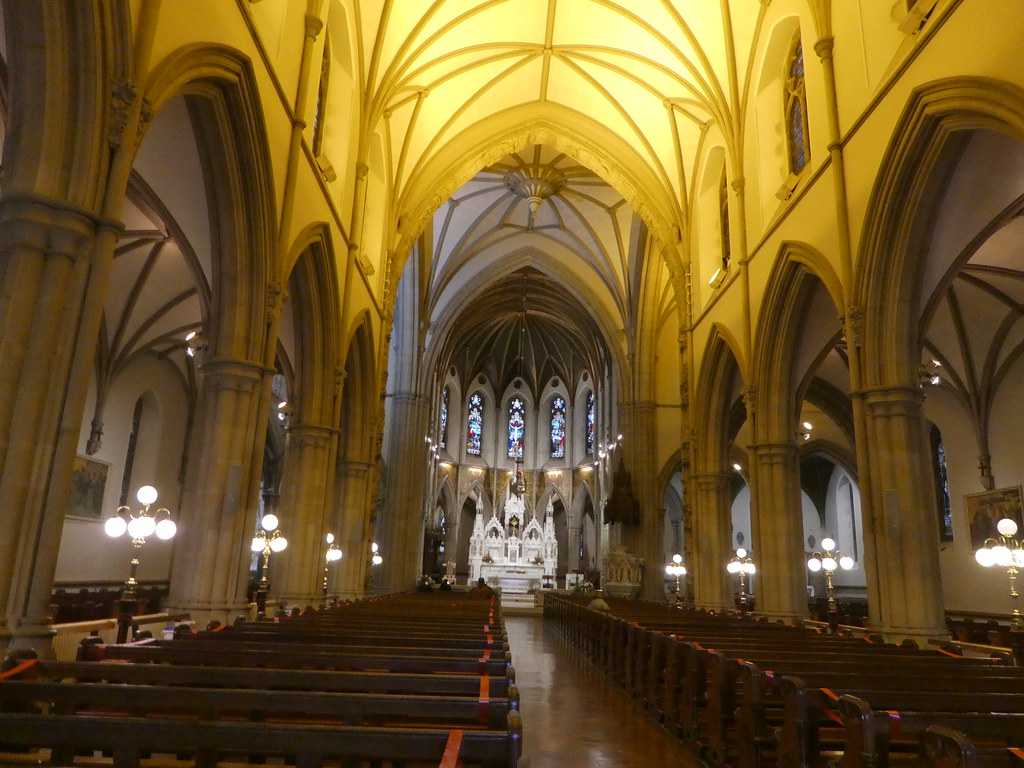
From there, it was just a short walk to St. Eunan’s Cathedral, constructed in Gothic Revival style between the years 1890-1900. Stunning stained glass windows illuminate the interior depicting scenes from the life of Jesus whilst the intricate ceiling arches are a wondrous sight.
Leaving the church, we returned to the car to embark on the next stage of our journey as Letterkenny is a convenient stepping stone for the Glenveagh National Park. The park was once the estate of Glenveagh Castle and is said to have the largest herd of red deer in Ireland. It is Ireland’s second largest national park covering 16,500 hectares of heathland, forest and mountainous slopes around Lough Veagh.

There is free parking close to the visitor centre on the northern shore of the lough which contains display boards on the history and nature of the park. There is also a cafe and an information desk where visitors can purchase shuttle bus tickets to the castle (adult return fares €3) and pick up maps of the numerous park trails.

As cars are not permitted beyond this point we opted to take the bus to the castle and walk from there. Buses do not run to a fixed timetable but a frequent service operates and we only had to wait a few minutes at each end for transportation.

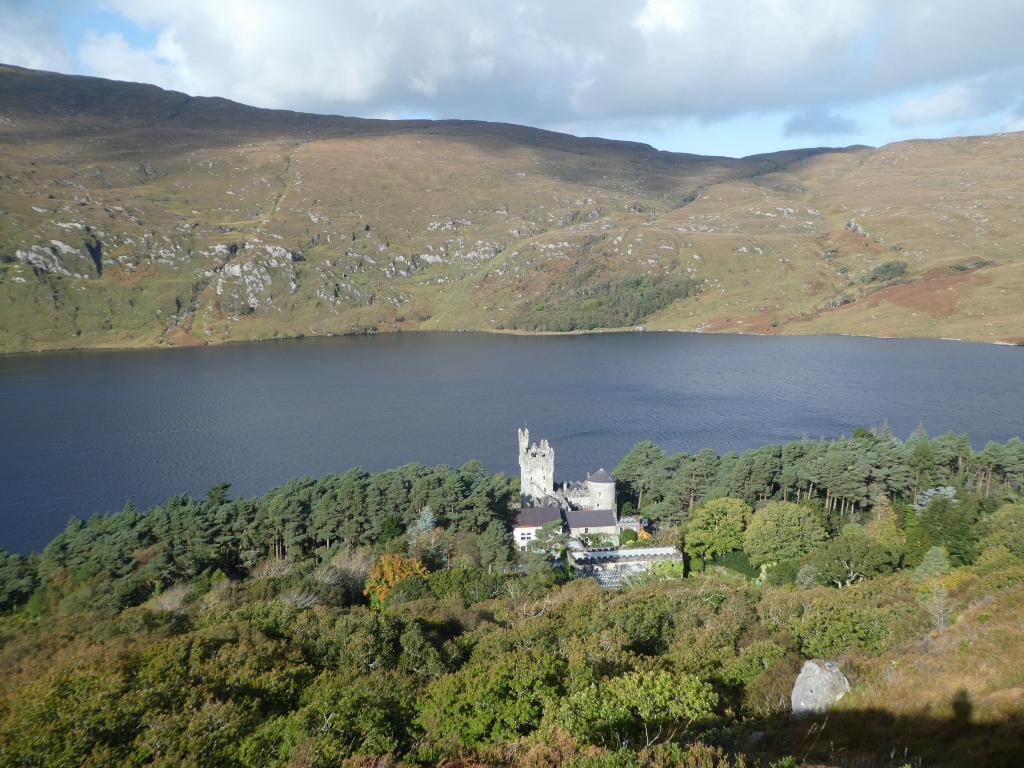
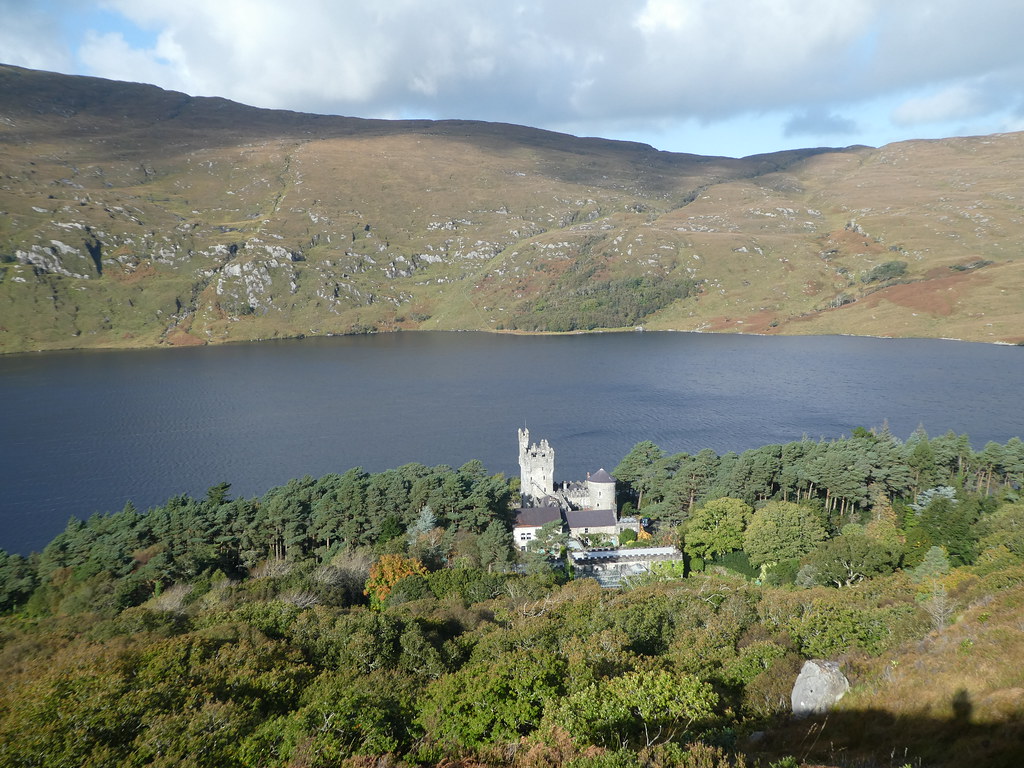
The magnificent Scottish baronial style castle was constructed from granite in the early 1870’s and is normally open to the public (admission €7) however it was closed at the time of our visit due to COVID. All was not lost though as we were able to explore the gardens and then follow several of the marked trails starting from the castle.

The short (1.5 km) View Point trail was quite steep in places but is definitely worth the effort as the path leads up to a ridge high above the castle from where we enjoyed spectacular views over Lough Veagh. It is without doubt a most beautiful place with its long, deep lake surrounded by rugged hills with a fjord like appearance. Returning downhill, we had to tread with care as the loose gravel underfoot was slippery and with hindsight it would have been better if we had changed into our walking boots before leaving the car park.
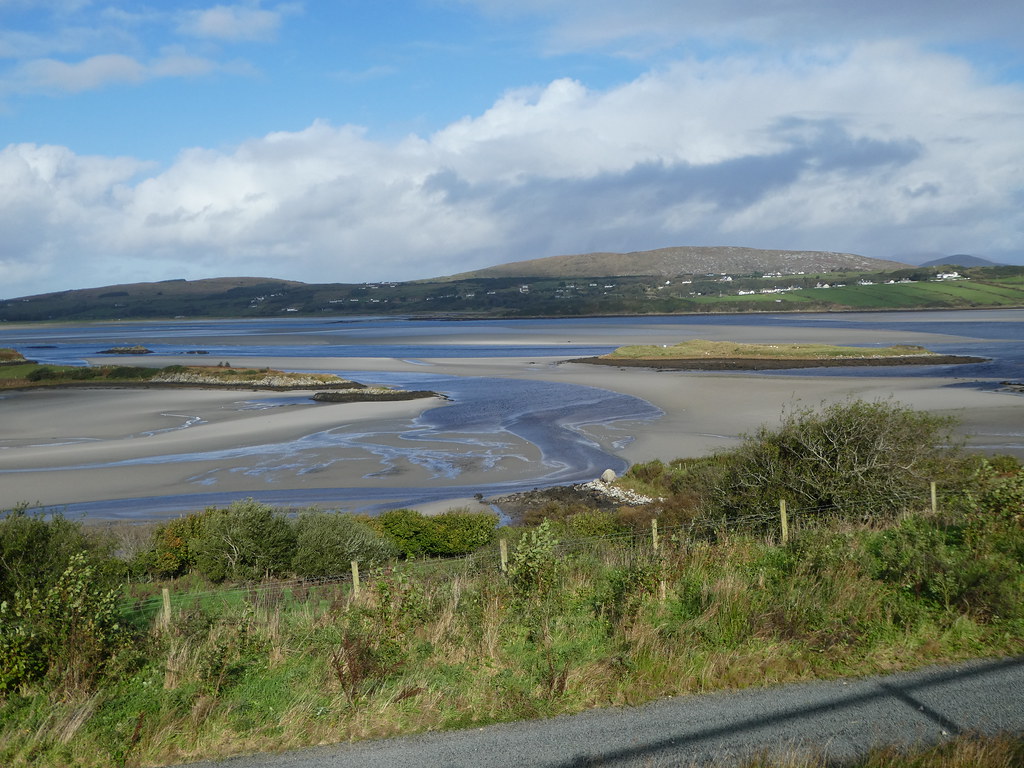
We extended our walk along the shores of Lough Veagh before returning to the car on the shuttle bus. We were soon on our way taking in the views alongside Dunlewey Lough. Just as we were pulling in to the viewpoint lay-by there was a sudden downpour and the mist rolled in over Mt. Errigal. After sitting patiently in the car for several minutes, the rain clouds eased enabling us to leave the car and take some photos.

We then continued along the N56 as far as Dungloe but not paying sufficient attention to our trusty Sat Nav. caused us to turn right instead of left at a T Junction. Within a short distance our good quality road had turned into a narrow track known as Caravan Road which had grass growing up the middle. There were no opportunities to turn around and so we continued for six miles feeling relieved that we didn’t come across too many vehicles coming the opposite way. Ironically just before our little detour, I had just said that the roads in this part of Ireland seemed better quality than some of the ones we had driven on in Cornwall the previous year.
Back onto a major road, we made better progress and soon arrived in the charming small town of Ardara which is designated as a heritage town being a major centre for the manufacture of hand-woven tweed.

We parked at the Triona Tweed Visitor Centre where we enjoyed a demonstration of hand weaving on looms that have been used for centuries. We were introduced to the stitches used in traditional garments and learnt how the colours of thread are inspired by the local landscape. The centre is based in the exact location where Donegal tweed first started and where over 60 weavers from the local area once worked.

Within the centre is a recreated weavers cottage which is an exact replica of the original family home. Complete with a thatched roof and a loom house to one side we learnt how people lived and worked in rural Ireland and how all the family were involved in the age old traditions of knitting, spinning and hand weaving.

From there, we wandered along the main street with its brightly painted cottages and interesting small shops and cafes giving the town an attractive feel.

In the centre of town stands the Heritage Centre which was established in 1992. Formerly the town courthouse and more recently the local library, its focus now is on the tweed industry. Sadly, it was closed at the time of our visit but we were still able to enjoy coffee and cakes in Sheila’s Coffee and Cream, a cosy cafe on its ground floor.

It was then back in the car once again and on to Donegal town, our final destination of the day just a 30 minute drive from Ardara. Our accommodation was located in the main square and we had been advised to park five minutes walk away by the quay. It’s a pay and display car park but inexpensive as we only needed to pay €1 for our overnight stay and parking until 11.00 the next morning.

Soon, we were checking in to the Abbey Hotel located in the picturesque Diamond at the heart of the charming town. First impressions count for a lot, and as we stepped into the hotel’s attractive lobby, I knew that we were in for a lovely stay. Not only that, on checking in we were pleasantly surprised to learn that we had been upgraded from a superior twin to an executive suite, so we took the lift to find out what was in store for us.

The suite was everything we could wish for and more with its king size bed, chaise longue and tasteful soft furnishings. From the windows we had views of the Diamond square surrounded by shops and historic Celtic stone buildings.

Before darkness fell we took a walk around the beautiful small town which straddles the River Eske at the head of Donegal Bay. Donegal boasts a fine selection of independent shops including Magee of Donegal specialising in Donegal tweed jackets and coats, a branch of Triona that we had visited earlier in Ardara and The Four Masters, a wonderful local bookshop.
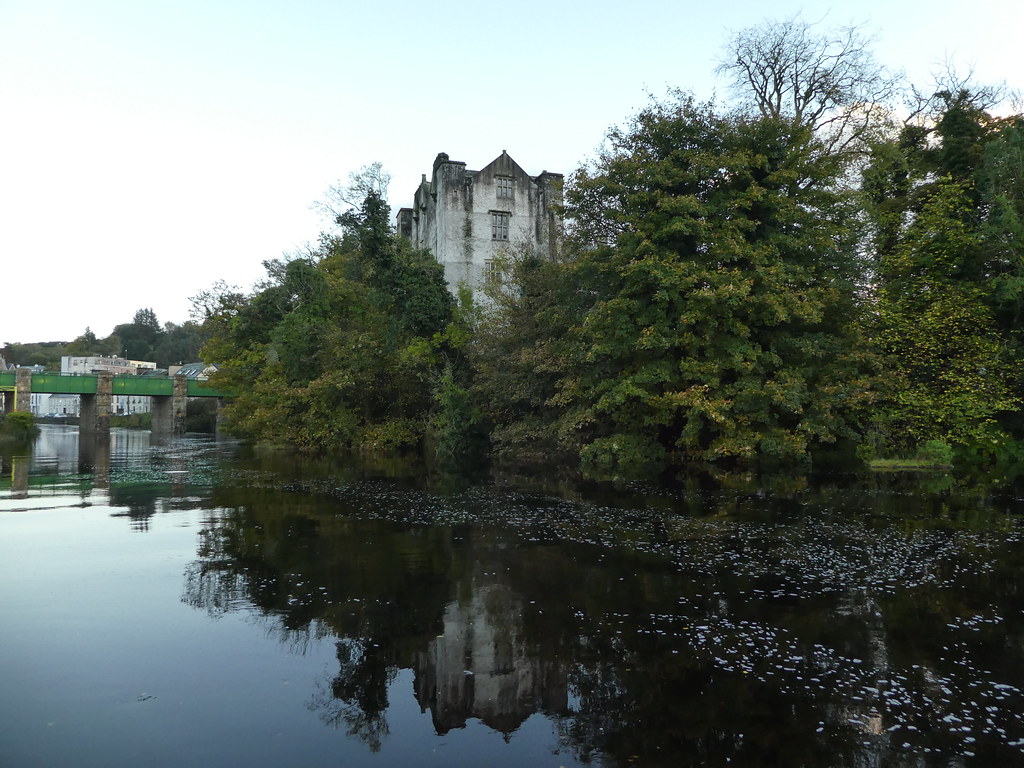
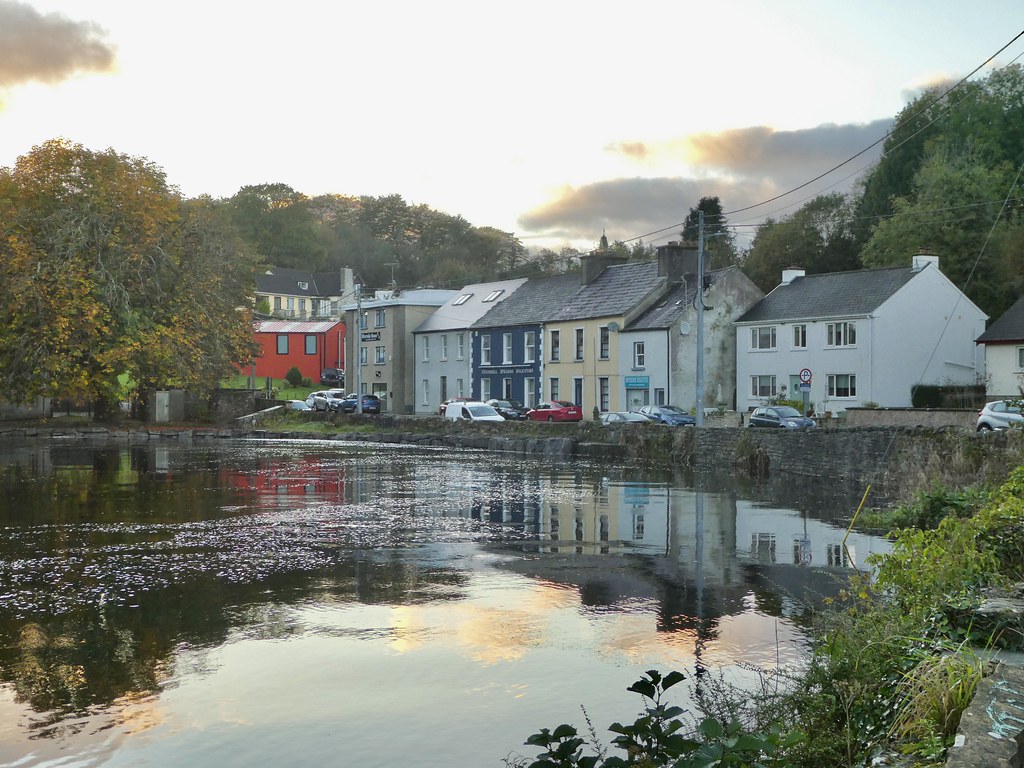
Moving on from the Diamond our stroll took us along the banks of the River Eske which looked exceptionally beautiful in the faded evening light. We then enjoyed views of the fairytale like castle and quaint cottages huddled close together along the riverside.
We came across the Donegal Railway Heritage Centre which displays rail memorabilia in one of the few remaining original station houses which opened in 1889. The museum was closed but on a future visit it would be interesting to view its rolling stock, interesting artefacts and model railway.

We returned to the hotel and after luxuriating in our suite’s free standing slipper bath we relaxed with glasses of fizz before heading down to the hotel’s Market House Restaurant for dinner.

Seated at a window table in the spacious but cosy restaurant we studied the menu which specialises in fresh local produce. After much deliberation as everything was so tempting, we settled on Tequila Prawns and Fig and Blue Cheese Salad starters which were both delicious as we couldn’t resist sampling a little of each other’s.

We followed this by Lamb Shank and a Seafood Fish Pie from the specials board, again both mouth-wateringly delicious down to the last forkful. Service was friendly and attentive and we were well looked after during the evening by Marie and her team who made us feel very welcome. The restaurant is open to both hotel guests and non-residents and it was so good to see it buzzing with activity on a mid-week evening. Several families were celebrating birthdays as we saw desserts arriving with flickering candles attached and with such delicious food on offer and a relaxed atmosphere I would be doing the same if I lived closer. The end of another memorable day on our adventure exploring the Wild Atlantic Way.
If you have enjoyed reading this post, you may also like:
Exploring Derry, Northern Ireland
Hiking & Chocolate Making, Northern Ireland


 Love Travelling Blog
Leave a reply to wrookieschu Cancel reply