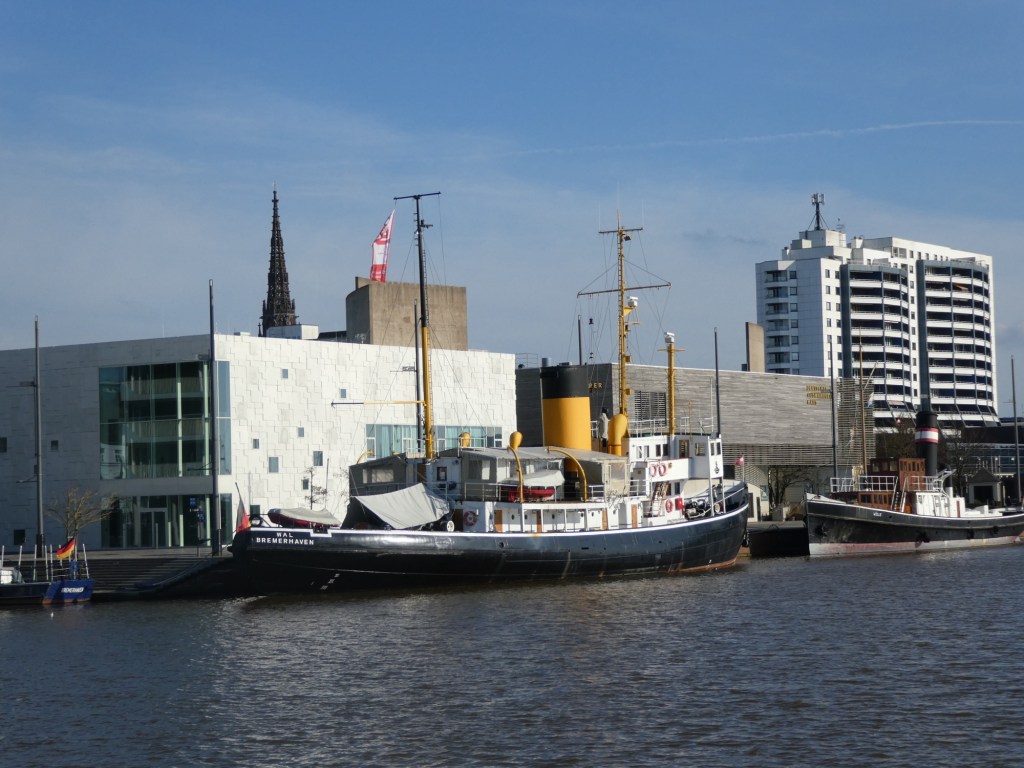
Bremerhaven is situated on the North Sea coast of Germany, a short rail journey from Bremen. Maritime history combined with historical sights makes for a worthwhile day trip. The town was originally a sea port for the Hanseatic city of Bremen but soon grew to become a city in its own right as a major port for fishing and international shipping. Millions of emigrants hoping to find better lives in the USA and South America left the shores of Bremerhaven on board ships from the port.
Getting there:

A frequent rail service operates between Bremen and Bremerhaven taking just 35 minutes. Excellent value are Day tickets for 1-5 people which also includes bus travel in Bremerhaven. The railway station in Bremerhaven is located a 25 minute walk out of town so I suggest taking a bus to outside the Emigration Museum as the majority of the city’s attractions are located close to there. (Buses 502, 505, 506, 508 all take this route).
Things to see and do:
The city has much to offer from nautical themed museums to harbour cruises and below are my suggested highlights.
German Emigration Centre

This is the only museum in Germany dedicated to migration focussing on the departure of Germans for the New World. From 1830 to 1974 there were seven million emigrants and Bremerhaven was the main point of embarkation.

The museum uses diaries and artefacts to bring the journey to life and all visitors are handed a card detailing an emigrant to follow through both audio stories and information boards which is an excellent way to personalise visits. Galleries visualise the individual steps of the emigration process and allow visitors to embark on a journey across the Atlantic, land at Ellis Island and complete the immigration process, before trying to find their place in the New World.

The museum has moving accounts of life on board the ships, layouts of the different cabins from luxurious first class down to extremely cramped conditions in steerage. Other exhibition areas reproduce Ellis Island and Grand Central Station in New York complete with shop layouts from the late 1800’s. German Emigration Centre.
German Maritime Museum

On the Weser Dyke, the German Maritime Museum takes visitors on a trip through the history of seafaring in Germany. The exhibition includes hundreds of maritime objects ranging from ship models, equipment and paintings to decommissioned old ships docked in the old harbour. The wooden remains of the 1380 Hanseatic cog are among the internal highlights. The wreck was discovered in the Weser river in 1962 and has inspired three modern replicas. Elsewhere the galleries feature exhibits on whaling, polar exploration, container shipping, fishing and the German navy.

Outside, climb on board the RAU IX whaling steamer, the Seute Deern, a barge launched in 1919, the submarine Wilhelm Bauer and numerous other retired vessels. Please note that the outdoor vessels are only accessible from Easter to October. German Maritime Museum.
Historical Museum Bremerhaven

Bremerhaven’s award-winning historical museum is free to visit and dedicated to history and culture of the north German city. The exhibition encompasses historical displays depicting the life of the region through the ages from the traces of early settlements to a 1950’s cinema hall.

Detailed replicas of a historic shipyard, apartment buildings, a harbour pub and factory floors complete with steam engines provide insights into Bremerhaven’s history as a port city. Historical Museum Bremerhaven.
River Weser Promenade and the Willy Brandt Plaza
Stroll along the promenade which extends onto the plaza. From there you can enjoy views of the Weser estuary as it joins the North Sea.

The wide square has large stylised fish painted across it which are rumoured to return to the sea when the waters flood the plaza a couple of times a year. Ferries depart from the pier to Heligoland and other locations.

A memorial statue of a family departing for America called “Die Auswanderer” (Goodbye Deutschland) was erected by the German American Memorial Association and stands on the left of the square.

The father is looking out to the North Sea and the future whilst the mother is looking back towards Bremerhaven.
Bremerhaven Lighthouse

Dating from the 19th century, this lighthouse is among the most prominent landmarks of the city. It is also known as the Loschen Lighthouse in honour of the person who designed it in Brick Gothic architectural style. It is the oldest operative lighthouse on the mainland along Germany’s North Sea coast.
If you have enjoyed this post you may also like:


 Love Travelling Blog
Leave a reply to WanderingCanadians Cancel reply