After starting the day with plates of smashed avocado and eggs cooked to perfection in The Cow’s attractive bar we set off to Treak Cliff Cavern just outside Castleton. Our approach took us through the dramatic limestone gorge of Winnats Pass with its stunning views as we drove along.

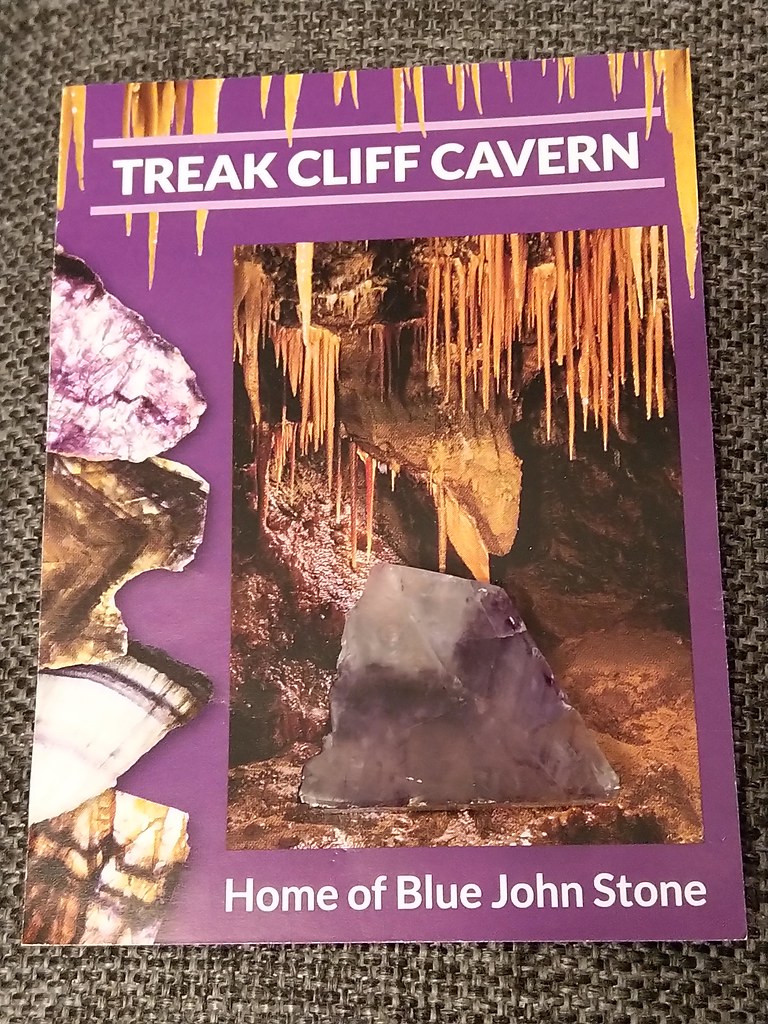
The Castleton area is a designated Site of Special Scientific Interest (SSSI) famous for its large deposits of Blue John stone. This semi-precious mineral is a rare form of fluorite characterised by bands of purple, blue or yellow and is unique to this part of the Peak District.
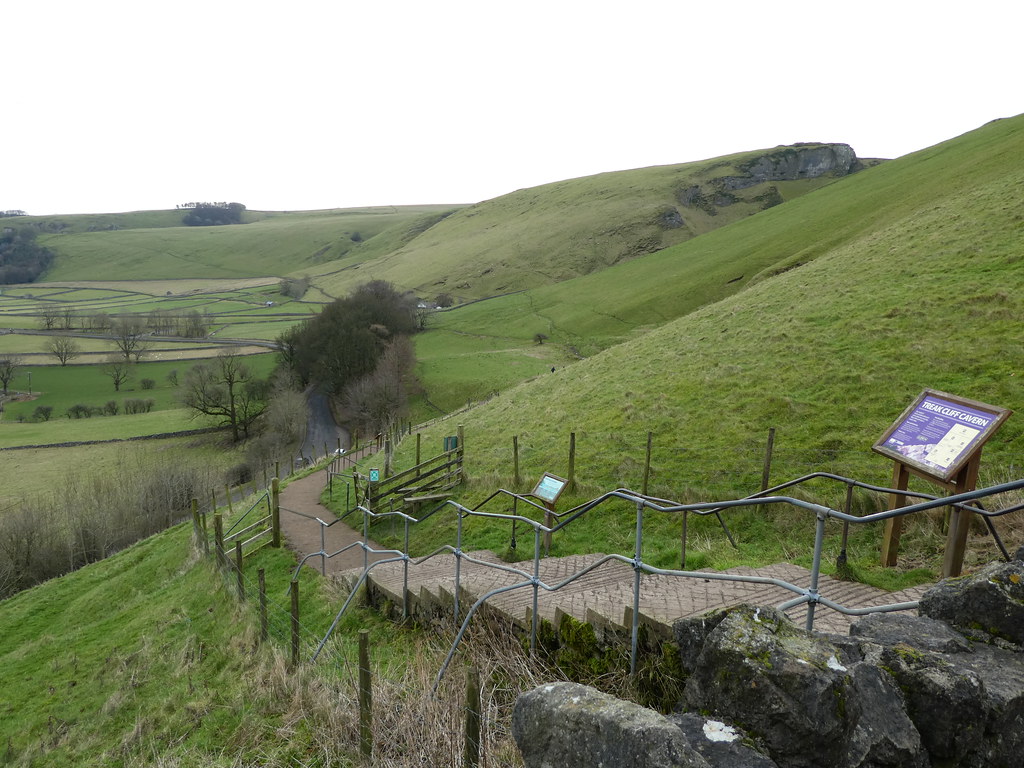
Treak Cliff has off road parking and from there a footpath leads uphill to the visitor centre and cave entrance. Tours are currently self guided by means of a cleverly designed app which we downloaded onto our phones. There’s no need to worry if you don’t have a smartphone though as several are available for visitors use when booking tickets. Tours average 50 minutes but the beauty of the self-guided tour is that you can go at your own pace and take as long as you wish using the audio guide along the route. The pathways are well lit and signage is clear so there is no danger of getting lost in the subterranean caverns.
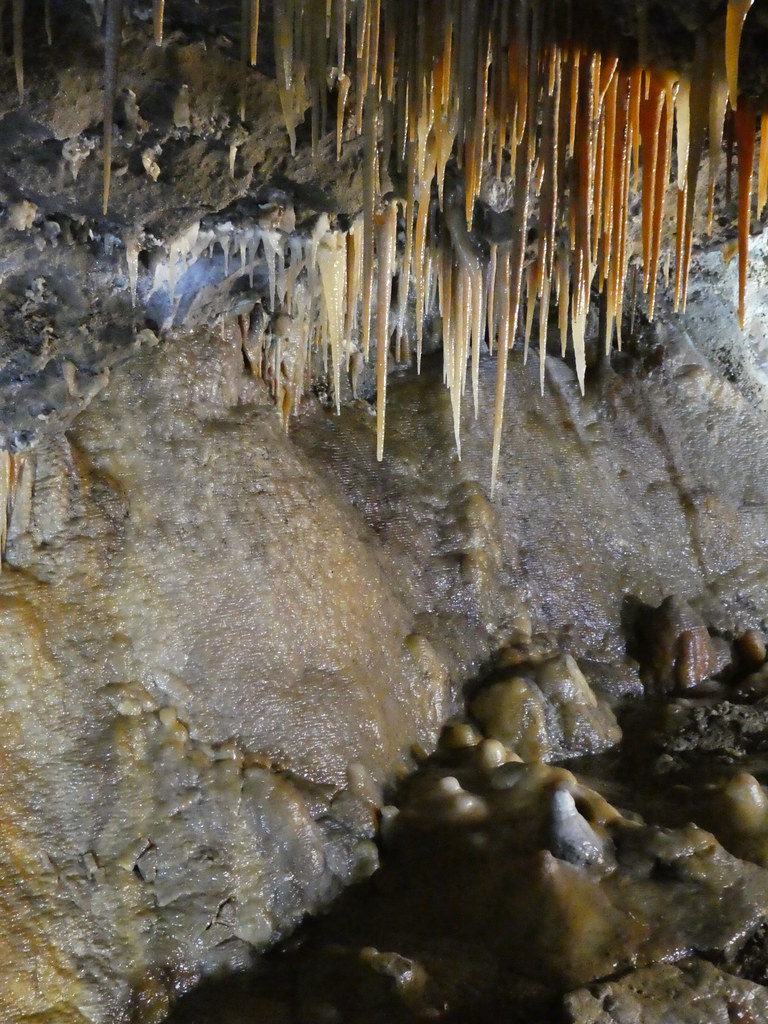
Listening to our narrated audio guide we learnt how miners in the 1750’s built a tunnel using only hand tools to reach the Blue John deposits and of how it has now been mined here for over 300 years. We gazed in wonderment at the results of hundreds of thousands of years of multi-coloured flowstone deposits leaving stunning stalactite and stalagmite formations and of fossils embedded in the limestone rock.

The underground temperature in the caves is a constant 10oc all year round and as the cavern floor is damp due to the natural underground environment I recommend wearing warm clothes and suitable footwear.

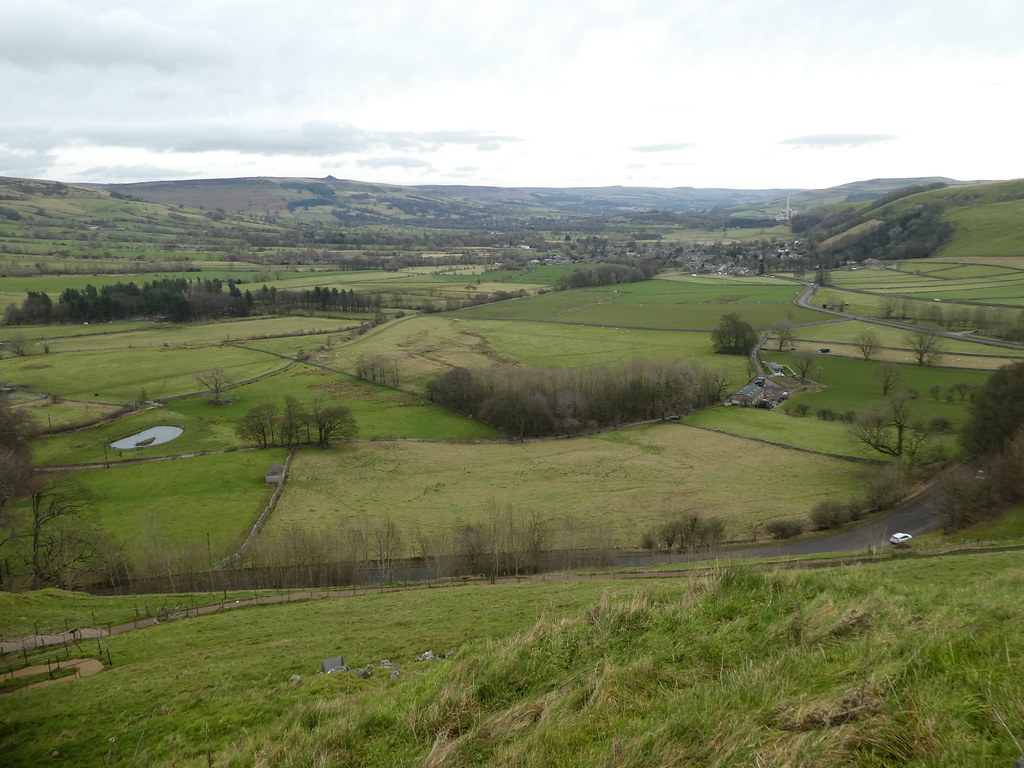
We emerged from the cavern slightly further up the hillside from where we enjoyed spectacular valley views across the valley. The path alongside Treak Cliff is also one of the starting points for Mam Tor, standing at 517m. It’s one of the Peak District’s most famous walking trails sitting on the edge of the gritstone Dark Peak and the limestone White Peak. We didn’t have time to embark on this circular walking route on this occasion but it is something that we would like to do on a future visit to the area.
Our visit to the cavern didn’t end there as we had opted to try our hand at stone polishing in the cavern workshop adjacent to the visitor centre. We started off by each selecting a piece of Blue John stone to work on and then following expert guidance we sanded these down before polishing the edges using a buffing machine. It was such a fun activity suitable for the whole family and the perfect souvenir to take home with us to remind us of our visit.

Before leaving, we explored the interesting small museum which displays a collection of Blue John, geological samples and a history of the cavern as both a working mine and tourist attraction.
It was then back down the steps to the car for the short hop to the village of Castleton which is one of the most beautiful villages of the White Peak. Not far from where we left the car was the main visitor centre for the Peak District National Park so that seemed a good place to start. The newly refurbished centre covers the geology of the area and includes a gift shop and cafe.

From there, we explored the narrow streets of this pretty village located in the Hope Valley surrounded by hillsides. It’s a popular centre for walkers with numerous outdoor shops alongside tea rooms and gift shops, with their windows filled with jewellery crafted from Blue John.

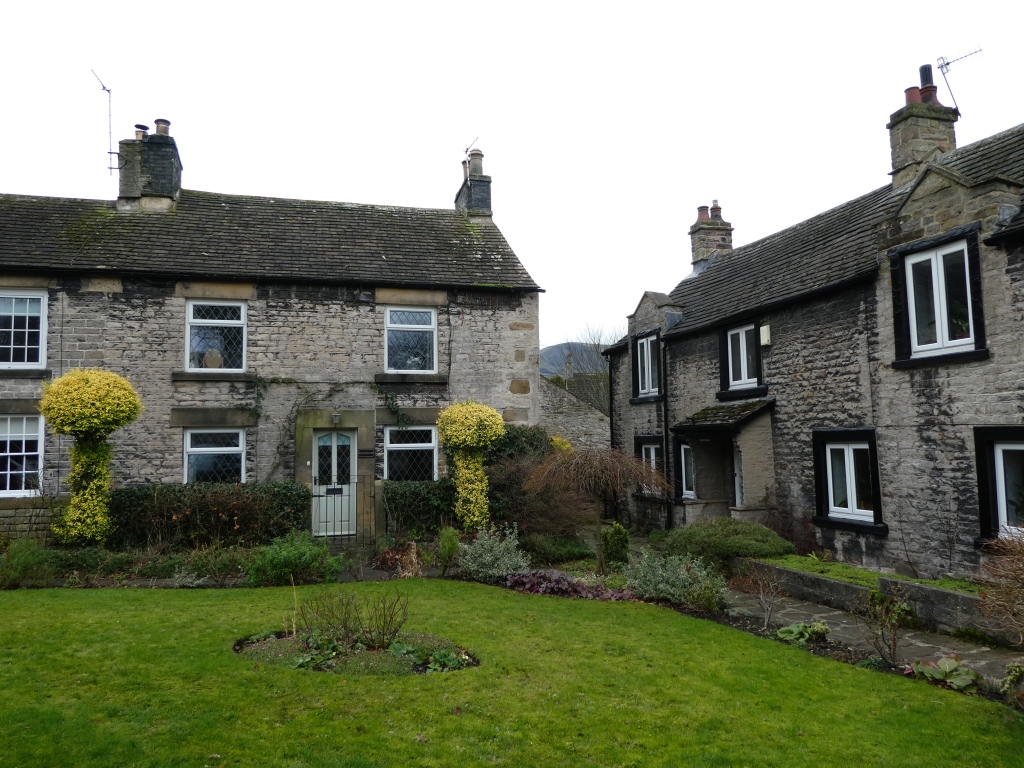
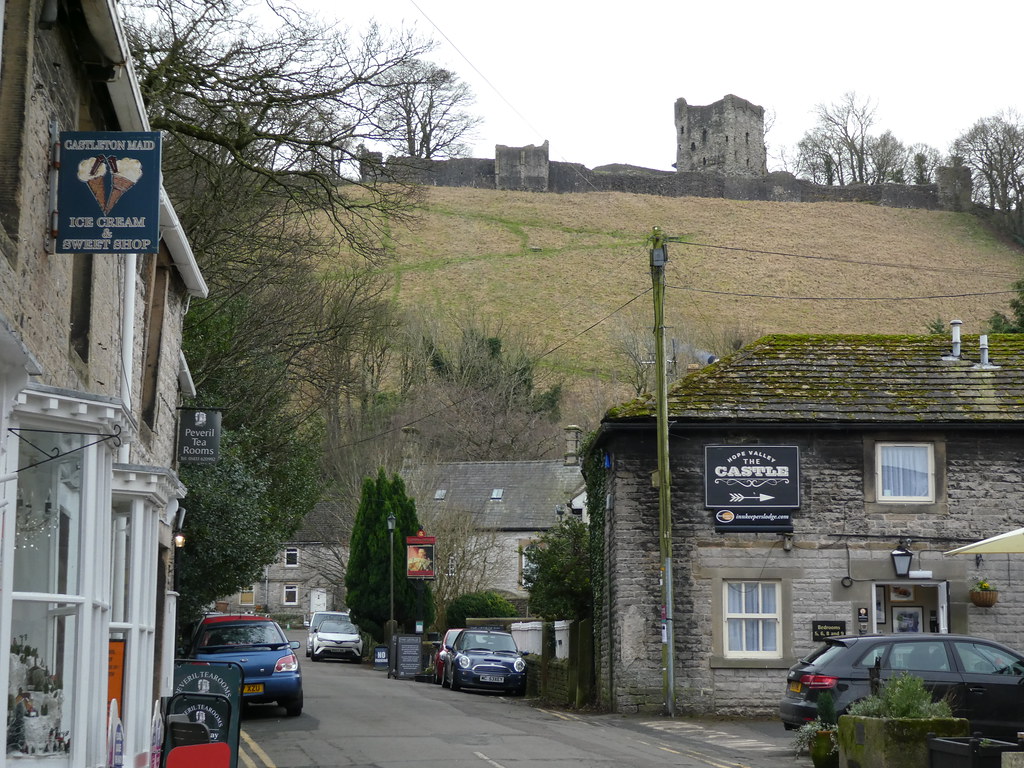
Our walk continued along winding lanes to the pretty village green with its old stone cottages overlooking the war memorial cross and Norman church. From there we had good views of Peveril Castle perched high on a hillside and constructed in 1086 by William Peveril who was a knight of William the Conqueror. It’s now operated by English Heritage with standard admission £7.60.
Back in the car it was then just a 10 minute drive along to Hathersage, our next stopping off point. The village is another of the Peak District’s outdoor hubs and is charming with a good selections of shops, pubs and restaurants. The village is overlooked by Stanage Edge which is a gritstone ridge stretching for four miles and extremely popular with rock climbers who visit from all over the country.

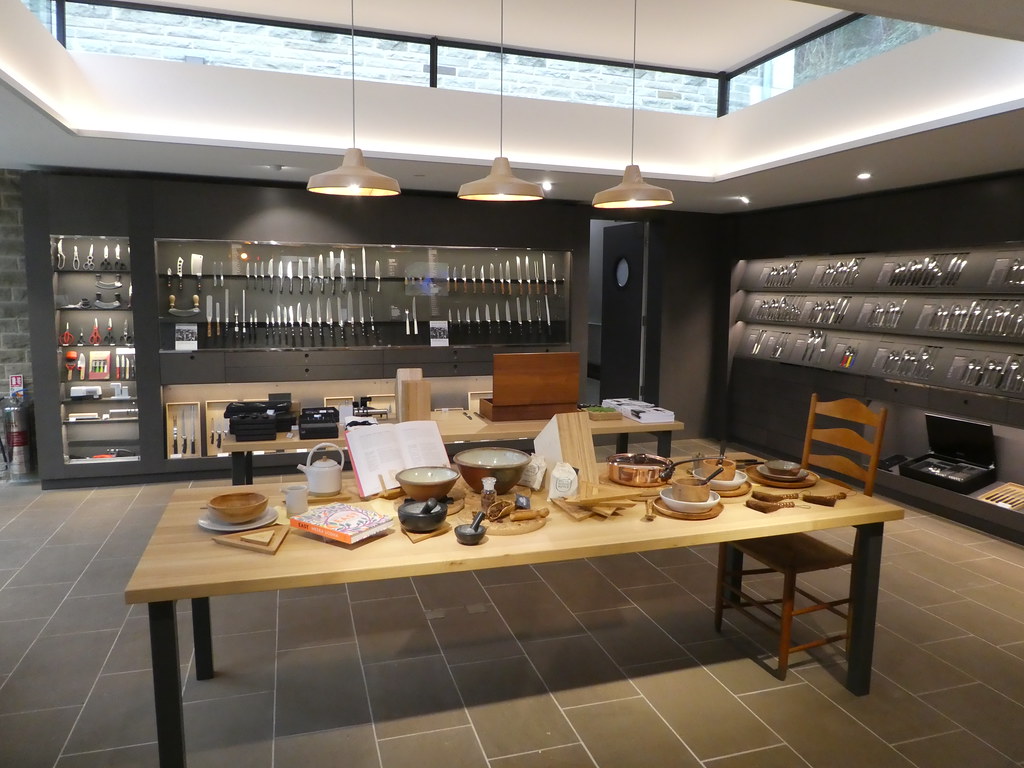
Another of Hathersage’s attractions located just outside the village is the David Mellor Design Museum, cutlery factory, shop and cafe which is free to visit. David Mellor was one of the best known 20th century British designers and the museum showcases his collection of work from handmade silver to his world famous cutlery.
It was a surprise to us that one of his aims was to improve the quality of the urban environment with his design of everyday features such as bus shelters, post boxes, litter bins, bollards and traffic lights. These set the new standard for street furniture and by the end of the 1960’s all of Britain’s traffic light sets were being replaced by Mellor’s new design.

If you are visiting at weekends, free Cutlery factory tours take place in the Round House at 3.00 p.m. on both Saturday and Sunday. We hadn’t timed our visit to coincide with one of these tours but couldn’t resist popping into the gorgeous cafe complete with working traffic lights and pedestrian crossing! We really enjoyed our visit which would appeal to anyone but especially those interested in design.

Leaving there, we continued on to Hassop Station near Bakewell for a spot of exercise. This old station building has been transformed into a cafe, book and gift shop. There’s a large car park divided between free parking to the right of the cafe and pay and display on the other side.

The station is also a popular starting point for the Monsal Trail, a traffic free cycling and walking route running along the former Midland Railway line. We’d arranged to hire e-bikes from Monsal Trail cycle hire with the intention of cycling the 8.5 mile scenic route which goes through four illuminated railway tunnels each about 400m long and two additional shorter tunnels.
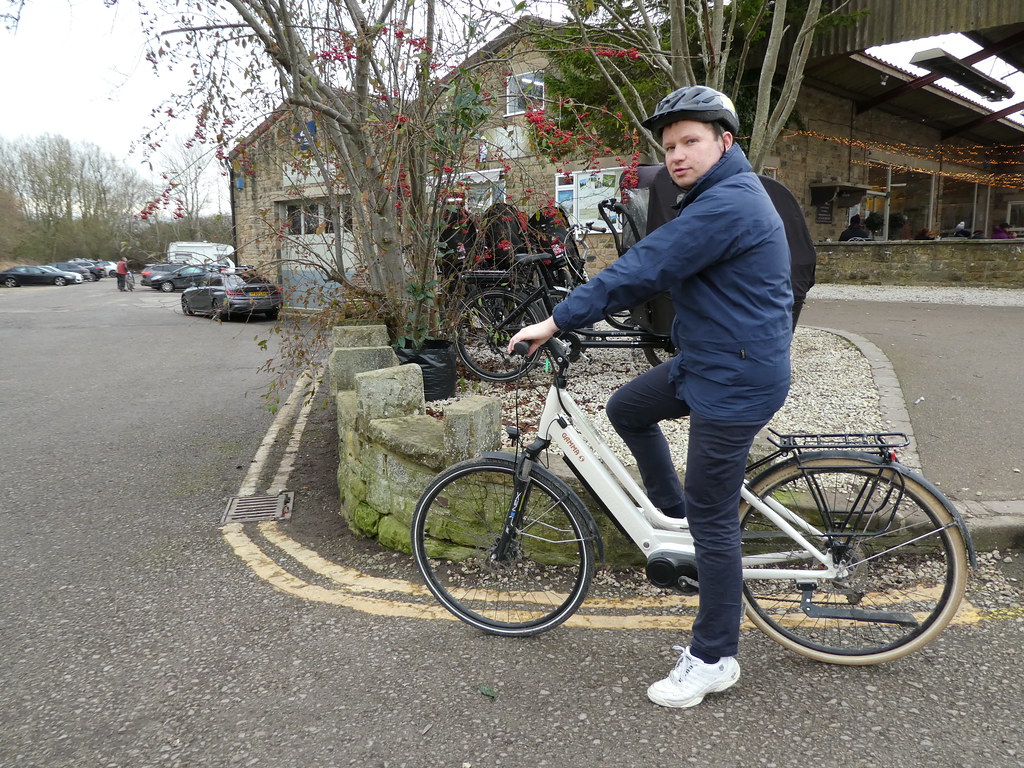
Unfortunately it wasn’t to be as on the day of our visit the Monsal Trail was closed from the entrance to the first tunnel leading onto the Monsal Viaduct for essential maintenance works. Rob at the cycle hike centre discussed options with us and we followed his suggestion by starting off cycling along the trail as far as the closure at the Headstone Tunnel entrance and then turning round and continuing onto Bakewell.

This alternative route was very pleasant and although our planned cycle trip along the full length of the Monsal Trail didn’t quite go to plan it might hopefully be possible for us to return later in the year to complete it then.

A pot of tea followed in the attractive cafe before making a short stop in the beautiful village of Tissington just north of Ashbourne. It was falling dark by the time we approached the village along an elegant avenue of lime trees but there was just enough left of the day to view its Jacobean Manor House and pretty stone cottages.

It was then just a short drive back to our cosy accommodation at The Cow in Dalbury Lees where we relaxed in our room awhile before having dinner at The Bluebell at Kirk Langley, a sister pub of The Cow just a five minute drive along Derbyshire’s leafy lanes.

The Bluebell has been recently modernised and is extremely tasteful with its contemporary interior. Over drinks we studied the menu featuring pub classics including beer battered fish and chips and homemade steak pie which we decided to opt for. Generous portions arrived, both cooked to perfection and we savoured every forkful. Service was friendly and unrushed even on a busy Friday evening with a mix of families and groups of friends all enjoying an evening out.
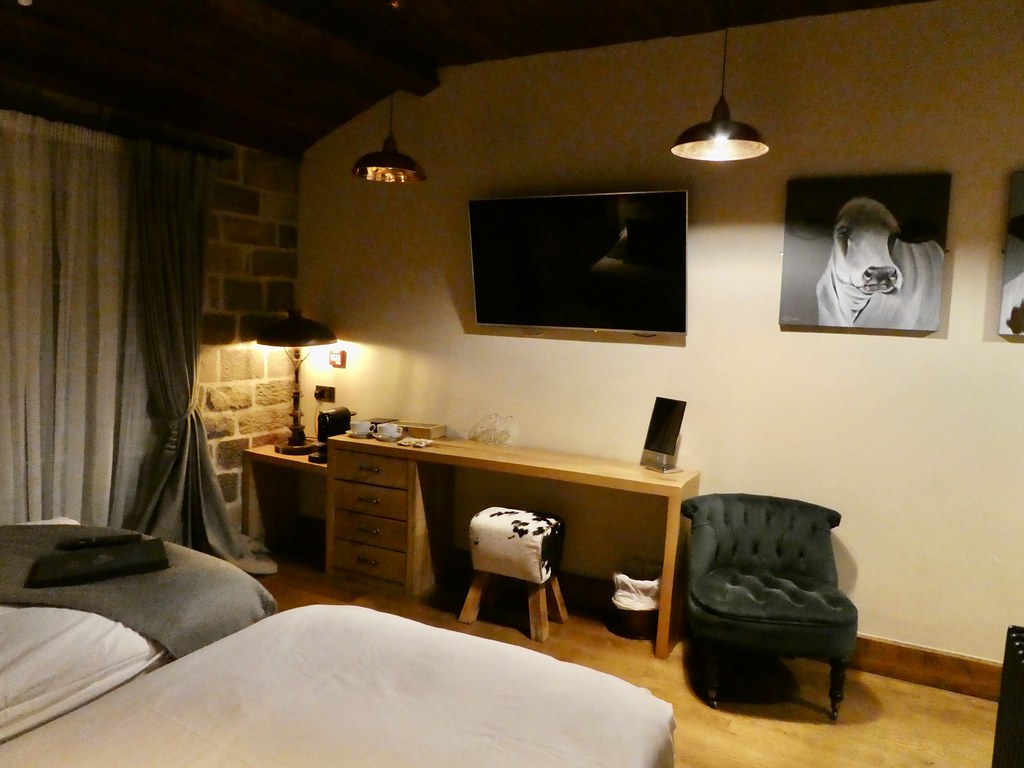
Back at our cosy inn, we made ourselves coffee from the in-room Nespresso maker and settled down in our comfortable room to watch television awhile before getting ready for bed. It was a perfect end to another fun filled day touring the beautiful Peak District.
If you have enjoyed reading this post you may also like:


 Love Travelling Blog
Leave a comment