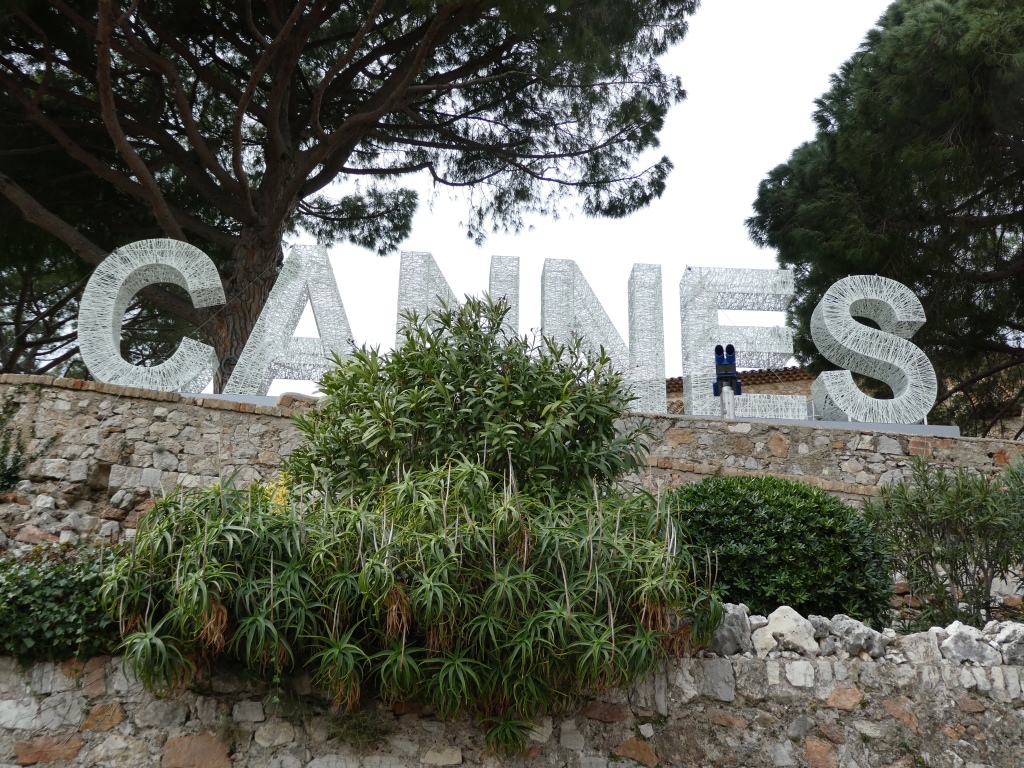
From our base in Nice it was easy to visit Cannes by public transport as it’s possible to travel there either by bus or train. We chose to take the train (final destination Marseilles) departing from Nice Ville central station (single tickets € 7.20). Do try to sit on the left hand side of the carriage on the outward journey to enjoy the best of the coastal views.

The station was just a few minutes walk from the centre and being ready for a coffee, we stopped off at one of the pavement cafes overlooking the Mediterranean. As with the previous day, it was still quite windy but remained dry and sunny which was the main thing.
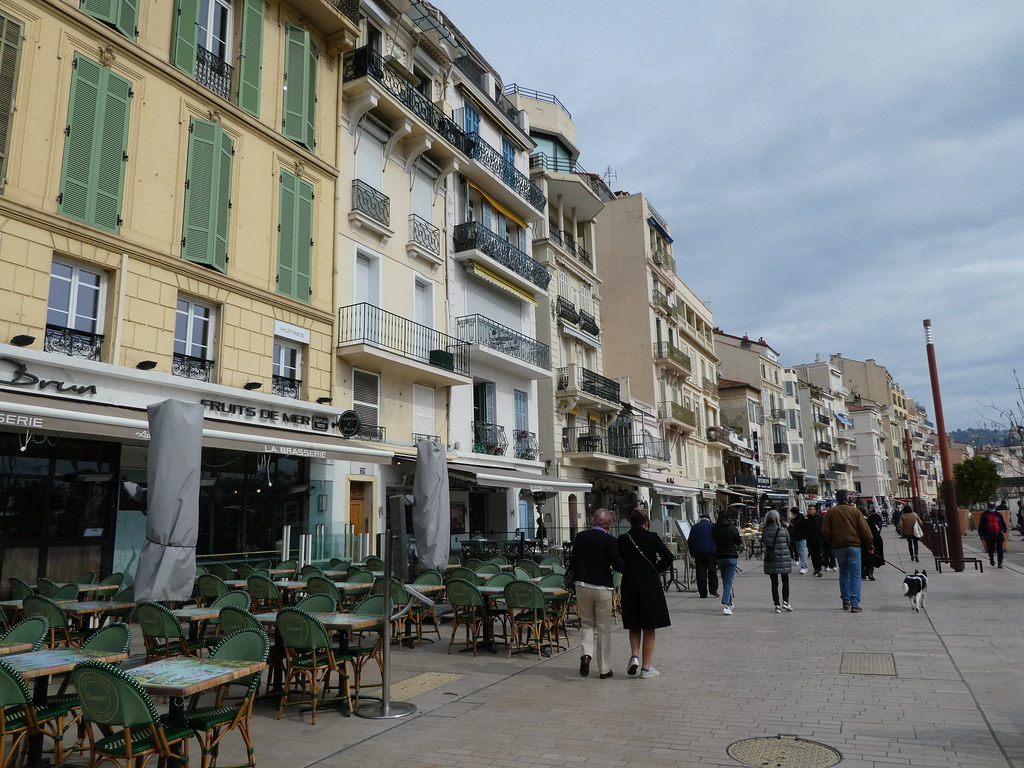
Re-fuelled with caffeine and an irresistible pain-au-chocolat each, we sauntered through the pedestrianised shopping streets until we reached the large red entrance arch to the market (Marche Forville).

With our visits to other town’s along the coast we had learnt not to leave it too late in the day to visit the market as they all close around lunch time. We always love a continental market as stallholders seem to have developed the art of displaying their produce in the nicest way possible to entice people to buy from their stalls.
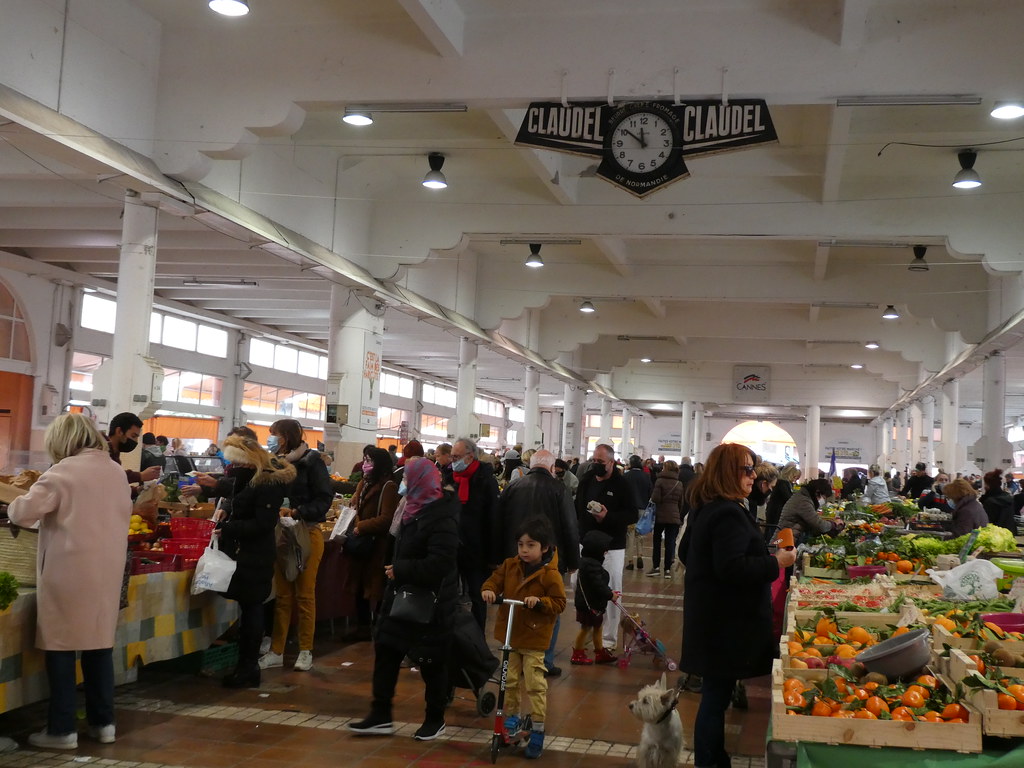
The market was attractively laid out and we enjoyed strolling along the aisles taking in the sights and aromas of locally produced cheese, juicy citrus fruits and freshly cut flowers. The market is open daily 7.00 a.m. – 1.00 p.m. and replaced each Monday by an antique market.

Close to the market hall and overlooking the old port stands the elegant neoclassical town hall, one of the most beautiful buildings in the town. This grand structure was opened in 1876 to house the Natural History Museum which remained there until 1941 before becoming the civic centre and town hall. The coat of arms of a white feather on a blue background can be seen in two places above the main entrance.

From there we headed up the hill to Le Suquet (old town). The path is quite steep but relatively easy with a mixture of steps and slopes, I counted 109 so it wasn’t all that many. For the less energetic a land train operates from the port which just arrived outside the Notre Dame church on the Place de La Castre shortly after us.
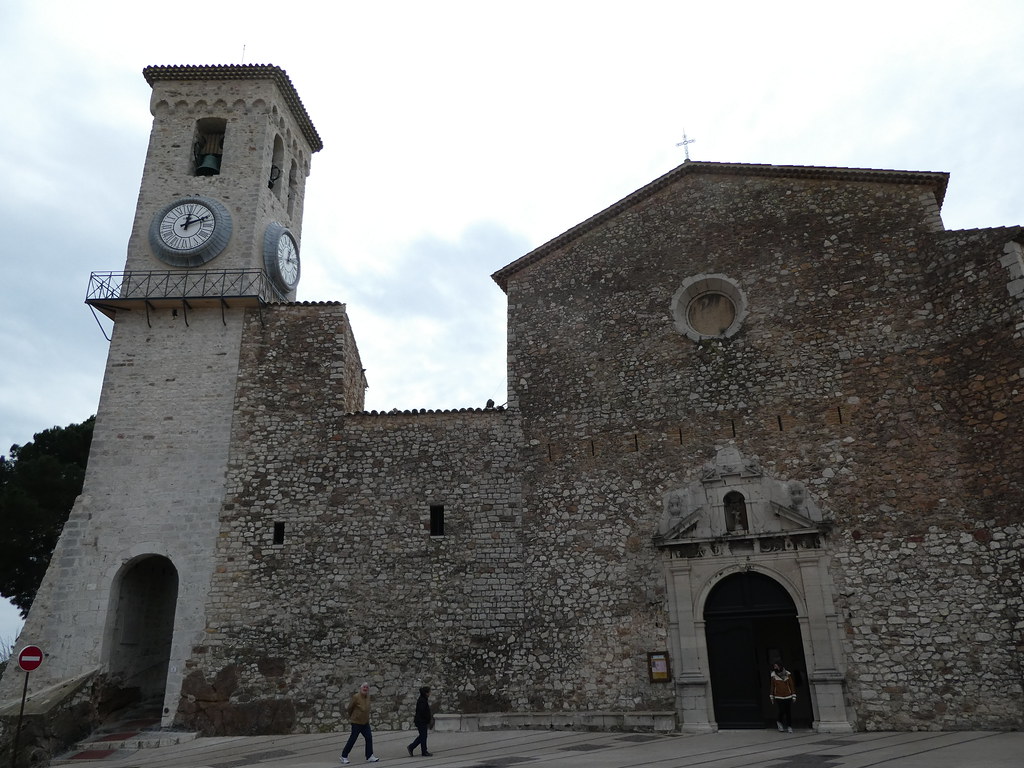
Le Suquet was the original site of the town when it started out as a Roman fort. The Romans actually occupied the entire area for five centuries and numerous Roman remains are still in evidence today. By the 12th century monks had taken over the area and built a castle on the top which is now the Musée de La Castre. Its galleries contain an art collection, musical instruments and artefacts covering the history of the town.

The castle itself is a historic monument and there is no charge to walk around its walls and enjoy the views from the top of its turrets with commanding views visible from all sides.

Having looked around the old town we then made our way back downhill and along Rue Meynadier, a narrow alleyway lined with charming old buildings, most of them now small shops and galleries.

We soon arrived at the old port, (Vieux Port) which is located at the foot of the old town we had just admired from the hilltop viewpoint. Berthed in the marina we viewed a mixture of small yachts and traditional wooden craft beside a fleet of fishing boats.
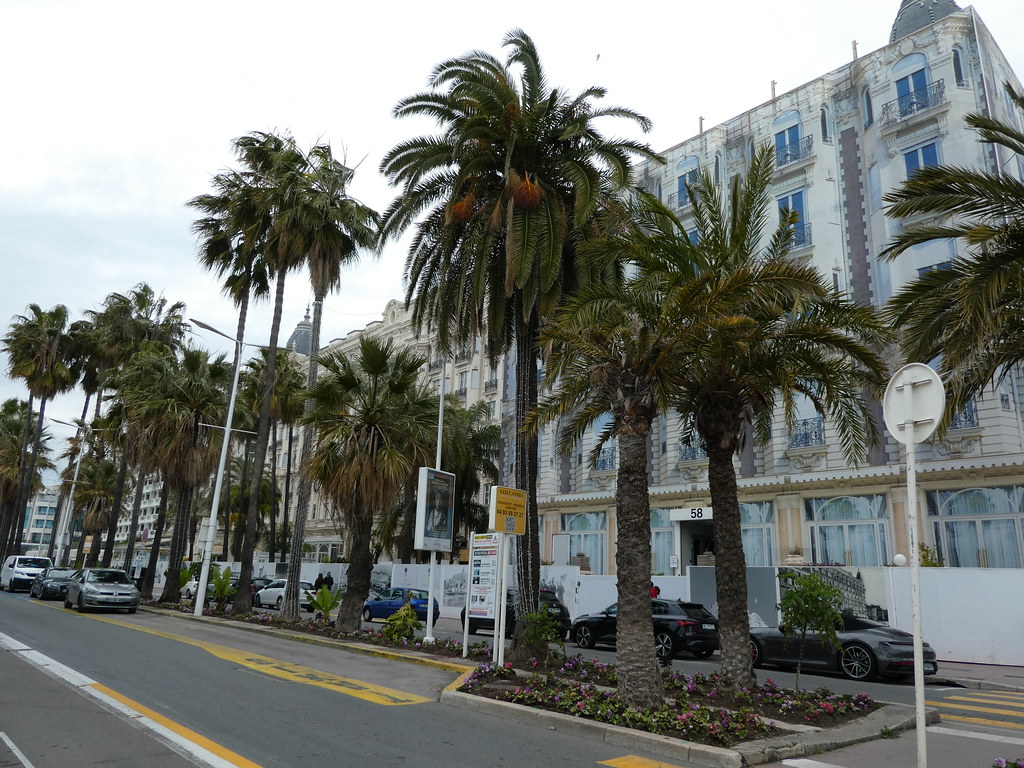
Some window shopping then followed along Rue d’Antibes with its designer stores, perfumeries and jewellers. As it was a Saturday the streets were filled with people but it wasn’t too crowded to feel uncomfortable. After popping into the Cannes branch of the Galeries Lafayette department store we turned onto the palm tree lined Boulevard de La Croisette with its grand art-deco hotels that overlook the seafront. Along here we found more high-end designer stores and even an Armani cafe.
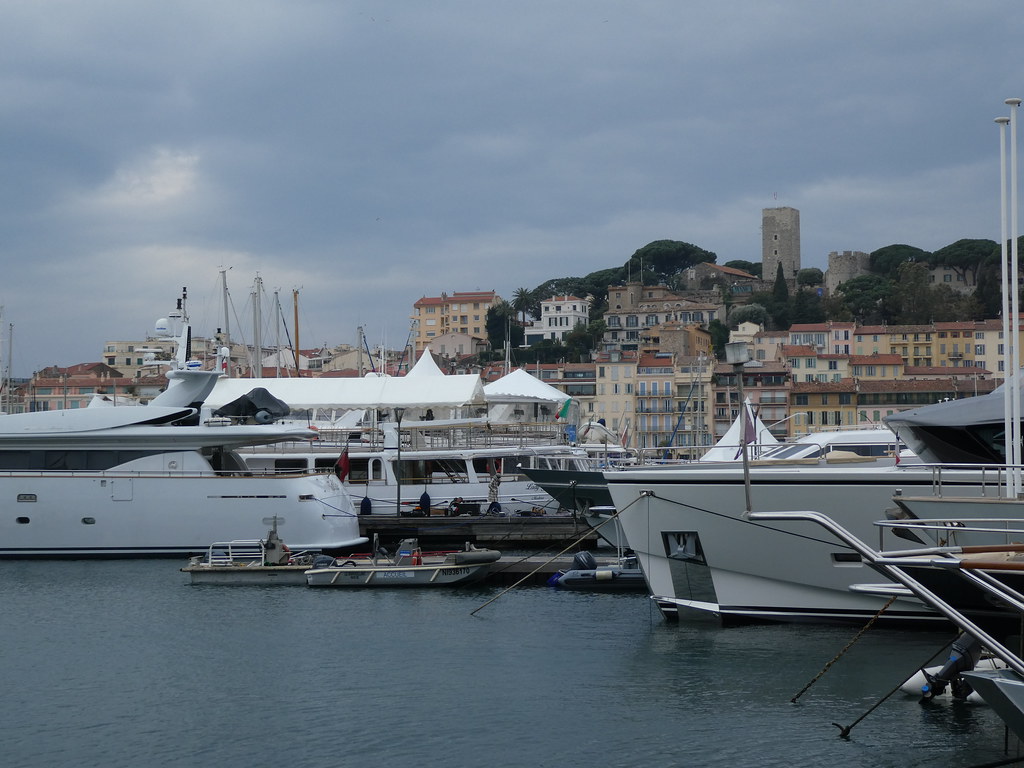
We then crossed the road for a walk along the Promenade de La Croisette. Walking along the seafront is a must when visiting Cannes ogling at the vast array of gleaming yachts and the glitzy private beach clubs built out over the sand. One of these clubs, the Carlton Beach featured in Alfred Hitchcock’s 1955 film ‘To Catch a Thief’ starring the actress Grace Kelly who married Prince Rainier of Monaco the following year and became a princess.

The marinas are the focal point of the town and although not quite as vast as those in Antibes they can accommodate a large number of boats, some of which can be up to 70m in length. The largest and most luxurious yachts are to be found along Albert Edward Pier and Quay Saint Pierre and as we wandered by there seemed to be a great deal of activity with crews preparing the boats ready for sailing trips. Not only are these boats tremendously expensive to buy, they also cost eye watering amounts of money to maintain, service and berth.

The Palais des Festivals et des Congrés is a huge building located on the waterfront alongside where many of the super yachts are moored. The festival hall is in use for most of the year holding exhibitions and conventions but each May the world’s attention turns to Cannes as the venue hosts the famous Cannes Film Festival. During this time Hollywood film stars descend on the French Riviera bringing with them their glitz and glamour. Embedded into the pavement on the side of the building we were able to see handprints of celebrities who have starred in films featured at the film festival.

After continuing our walk slightly further along the coast we turned inland to find somewhere to eat before returning to the station for our return train to Nice.
This was our last full day of our week’s stay on the Côte d’Azur which had passed by all too quickly. With so many interesting places to visit, all easily accessible from our base in Nice we’d enjoyed a lovely week on the French Riviera.
If you have enjoyed reading this post, you may also like:


 Love Travelling Blog
Leave a reply to WanderingCanadians Cancel reply