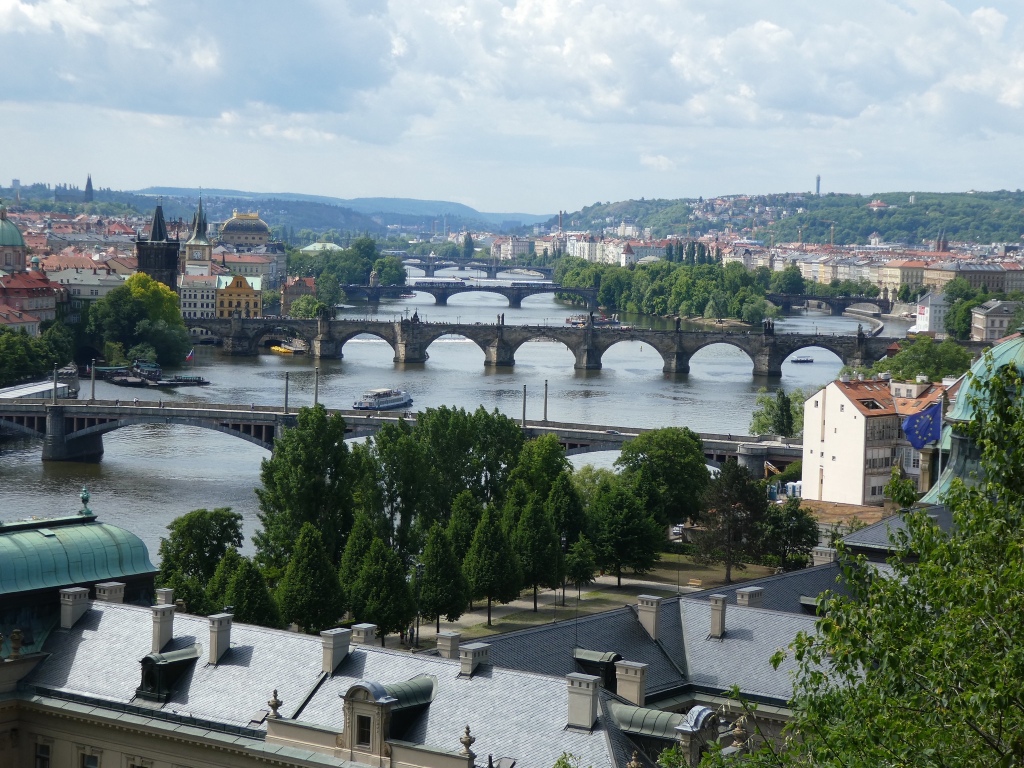
Our final day in Prague had come around all too quickly but as we were booked home on an evening flight we still had plenty of time to enjoy the city. After checking out of the lovely Mama Shelter hotel we took a short tram ride to Letna Park, located in an elevated position in the suburb of Holesovice, on Letna Hill on the northern edge of the Vltava river. Trams 15 and 17 both stop near one of the park’s entrance gates and from there it is just a short but steep uphill climb.

Letna Park is laid out in a parkland setting with walking and cycling paths criss-crossing the grassland, many of these shaded by mature trees. Of particular interest is a red Metronome which stands 75ft (22m) tall in a prominent position overlooking the city.
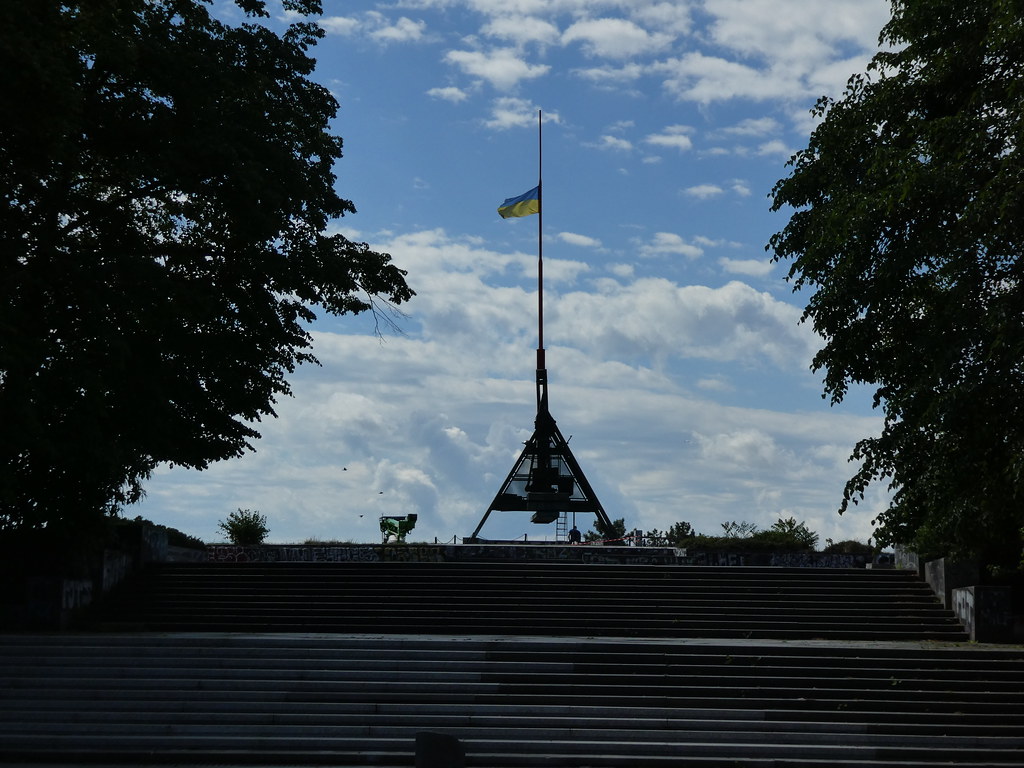
It was on this very spot that a gigantic monument to Joseph Stalin was demolished in 1962 with the 7 tonne metronome installed in its place in 1992 to symbolise the end of the communist regime. The metronome stands on top of a large concrete platform and although it is there to keep time, it was not working as it was undergoing maintenance when we visited.

A little further along from the metronome stands the beautiful Hanavsky Pavilion which is one of the most impressive art nouveau buildings in the city. It was originally built as the pavilion for the Komârov Ironworks for the Prague Jubilee Exhibition of 1891. This was the first cast iron structure to be constructed in Prague and is now home to a beautiful cafe restaurant which boasts stunning views of several of the bridges over the Vltava river.

On leaving there, we took a tram to Malostraka so that we could visit the Wallenstein Gardens and Palace. The entrance to the palace gardens is next to the Malostraka metro station and is open to visit between April and October (admission free).
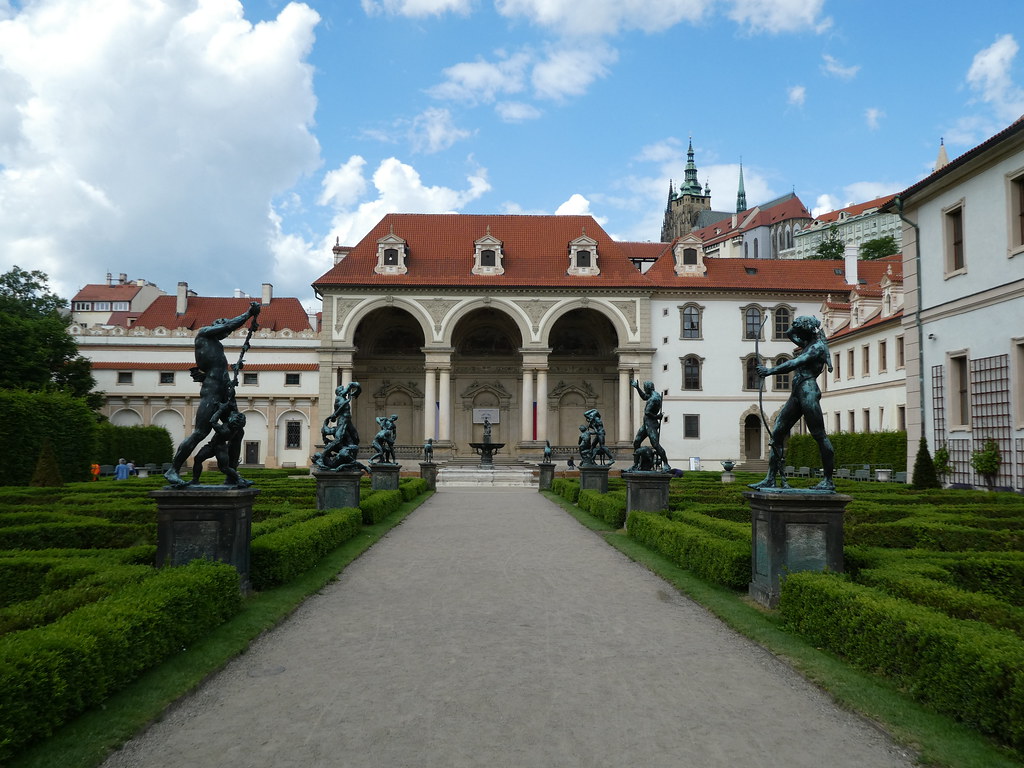
This geometrically designed garden surrounds Wallenstein Palace which is the seat of the Senate of the Czech Republic (similar to the UK House of Lords). The palace was constructed between 1624-1630 and commissioned by Albrecht of Wallenstein who was one of the richest and most powerful noblemen of that time.

The elegant 17th century garden is designed in Baroque style and adorned with brass statues, fountains and a pond filled with koi carp. The gardens are an oasis of calm in the busy city centre and often overlooked by tourists so I recommend visiting as they are truly beautiful.

After relaxing on one of the park benches awhile we wandered through the Lesser Town with its cobblestone streets, stone archways, cosy pubs and cafes. We then returned to the hotel to enjoy lunch on its large, sunny terrace. Here, we settled down on one of the comfortable swing seats and enjoyed a leisurely lunch of freshly prepared pizza and a glass of local beer.
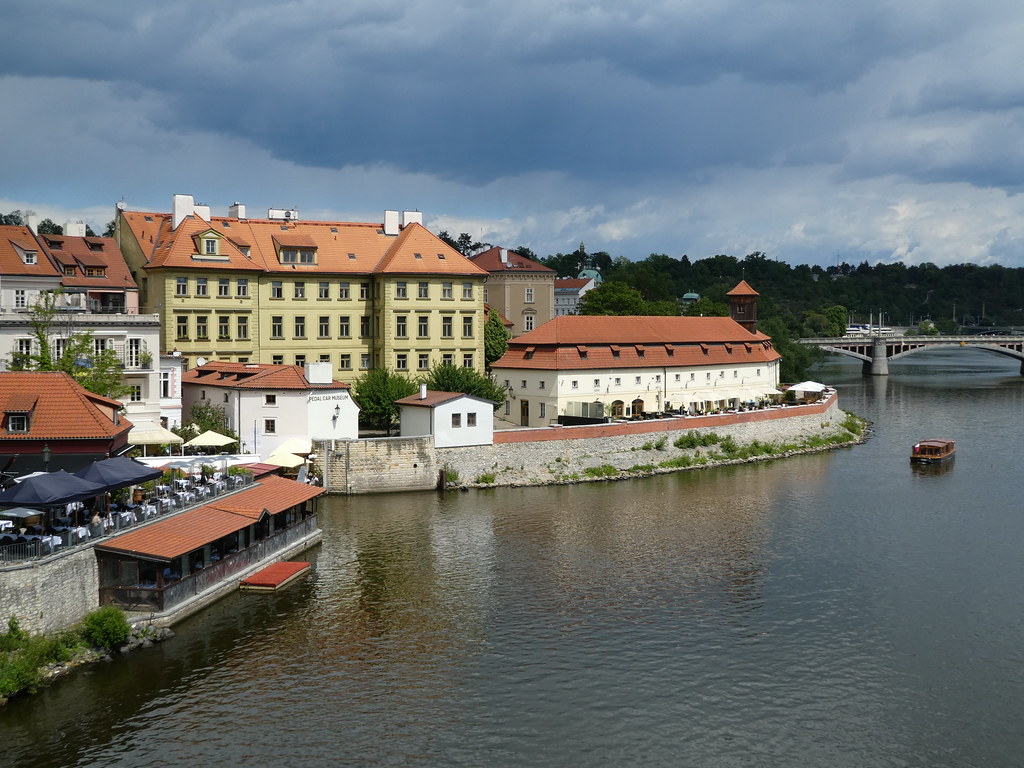
Feeling refreshed, we hopped back on a tram to enjoy a riverside walk crossing onto several of the city’s islands which are easy to access. We started at Slovansky Ostrov, a small island featuring winding paths and grassy areas. The island was formed by silt deposits of soil during the 17th century and is now a popular place to sunbathe and hire a boat. It’s southern tip is connected to an art gallery and restaurant that also serves as a bridge.
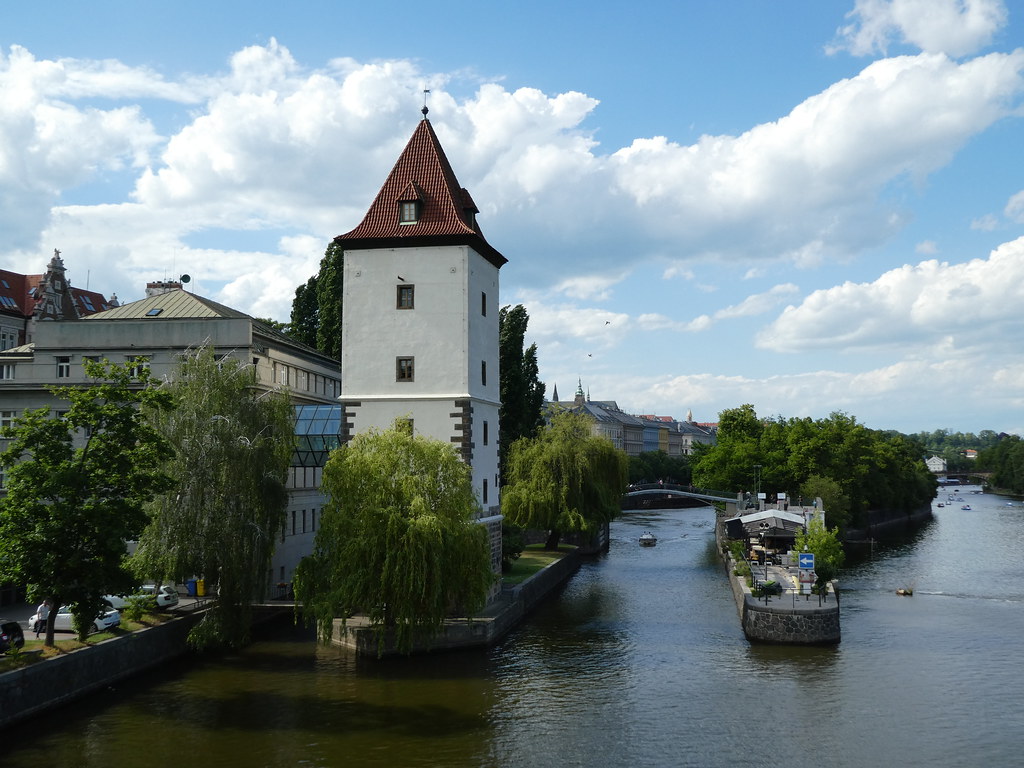
On leaving there we crossed over to Détsky ostrov. The entrance to this island is over an arched stone bridge from where we walked along the shore as far as a lock. We should have been able to access a further island but the access bridge was closed due to maintenance work and we needed to retrace our steps. This island is popular with young families as it contains a series of playgrounds arranged in age order with the ones for the youngest children nearest the main bridge.
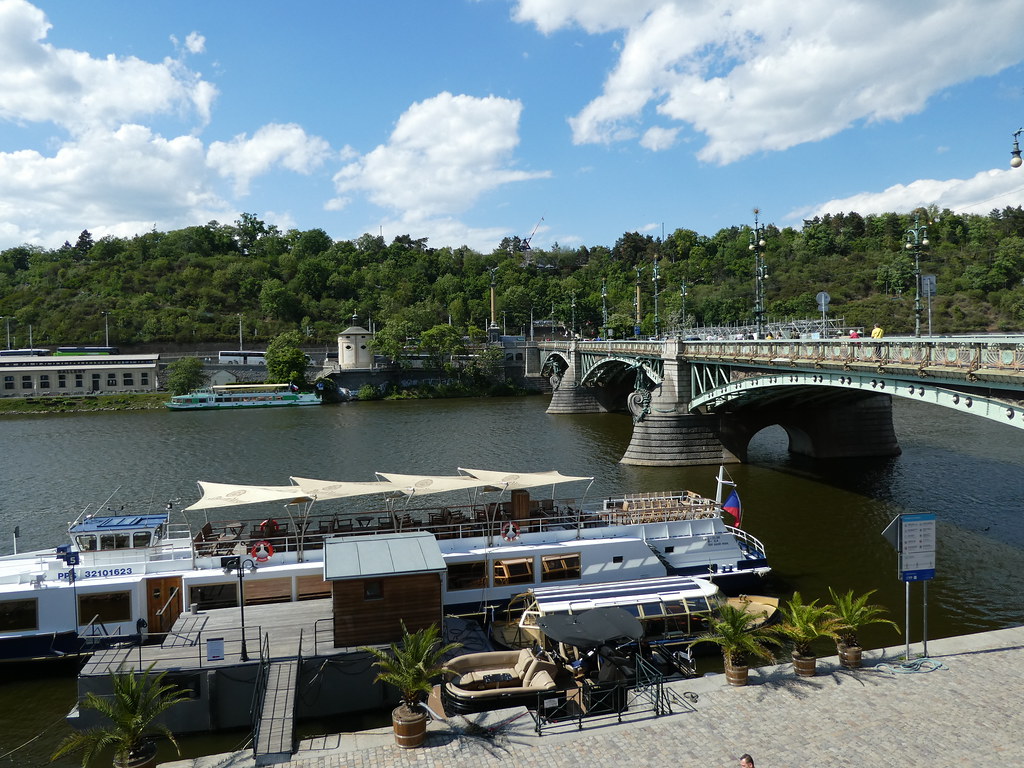
After quite a lot of extra walking we finally made it on to the third of the Vltava river’s islands Strelecky Ostrov. Bridge Most Legil connects the two parts of the island and from its pathways there are excellent views of the famous Charles Bridge. Dotted around the island are plenty of options for eating and drinking together with a stage bar surrounded by picnic tables. This island was first mentioned in the 12th century when it was used for archery practice in the time of Emperor Charles IV.
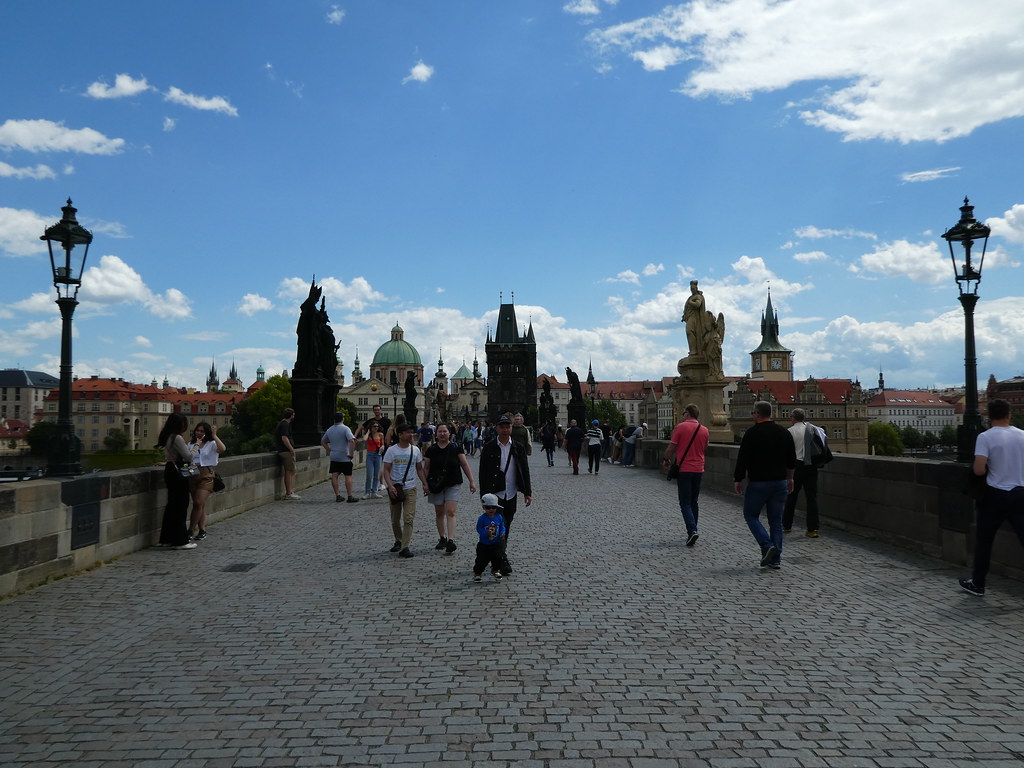
That concluded our riverside walk and of our visit to Prague. Upon our return to the airport we were delighted to discover it was running smoothly and there were no delays at either check-in or through security. This allowed us ample time to relax in the departure lounge with one final glass of the local Tyskie beer prior to boarding our return EasyJet flight to Manchester.

I hope you have enjoyed this series of posts on Prague and that they may inspire you to consider visiting the Czech capital yourselves.
We were guests of Visit Prague and as always, all views and opinions are entirely my own.
If you have enjoyed reading this post, you may also like:


 Love Travelling Blog
Leave a reply to grandmisadventures Cancel reply