A leisurely breakfast in the stylish restaurant of Nuremberg’s Leonardo Royal Hotel was a perfect way to start the day tucking into a varied buffet selection followed by omelettes freshly made to order. After downing two cappuccinos we were ready for the day ahead and utilised our Nuremberg Cards by taking the metro, followed by a tram to Tiergärtnertor.

This tram stop was just a short walk from Albrecht Durer House located just below the Imperial Castle and we had managed to time our arrival just as the museum was opening its doors. Albrecht Dürer (1471-1528) is recognised as one of the leading artists of the Renaissance period transforming printmaking from craft to fine art, often depicting religious subjects.

We took a self guided audio tour of the half timbered house where Dürer lived and worked from 1509 until his death in 1528. Standard admission is €6 and as with all museums/ attractions visited during our stay included in the Nuremberg Card.
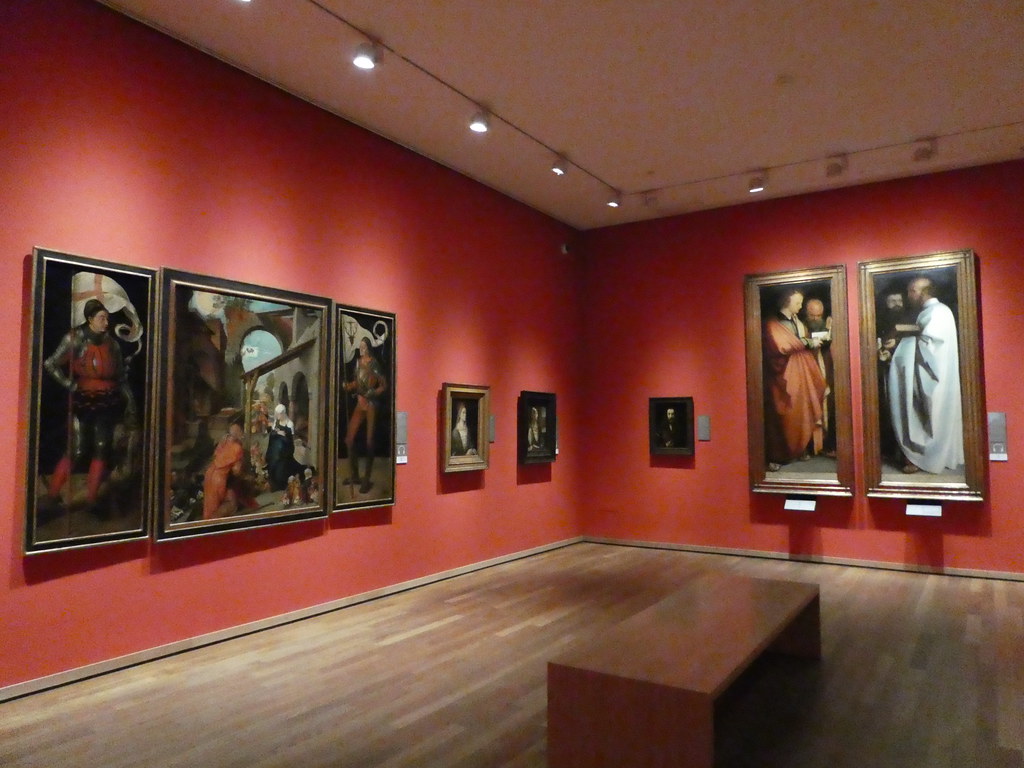
The building was one of the few survivors of the devastating bombing of the Altstadt (old town) in 1945. The house was converted into a museum in 1971 and we were able to view the period furnishings of the time. There’s also a recreation of Dürer’s workshop with working printing equipment (demonstrations available at certain times).

From the museum we strolled around the corner to join a guided tour of the Rock Cut Cellars (€9.90). Occasional English speaking tours are offered but at the time of our visit only German ones were available. This wasn’t a problem though as we were given audio guides which we listened to at numerous points whilst the guide spoke to the rest of the group.

The tour set off from the courtyard of Brauereiladen and we were taken to the entrance of the cellars just behind the Albrecht Dürer statue located just down the road. After going down a flight of steps our tour guide led us through a series of narrow tunnels on varying levels.
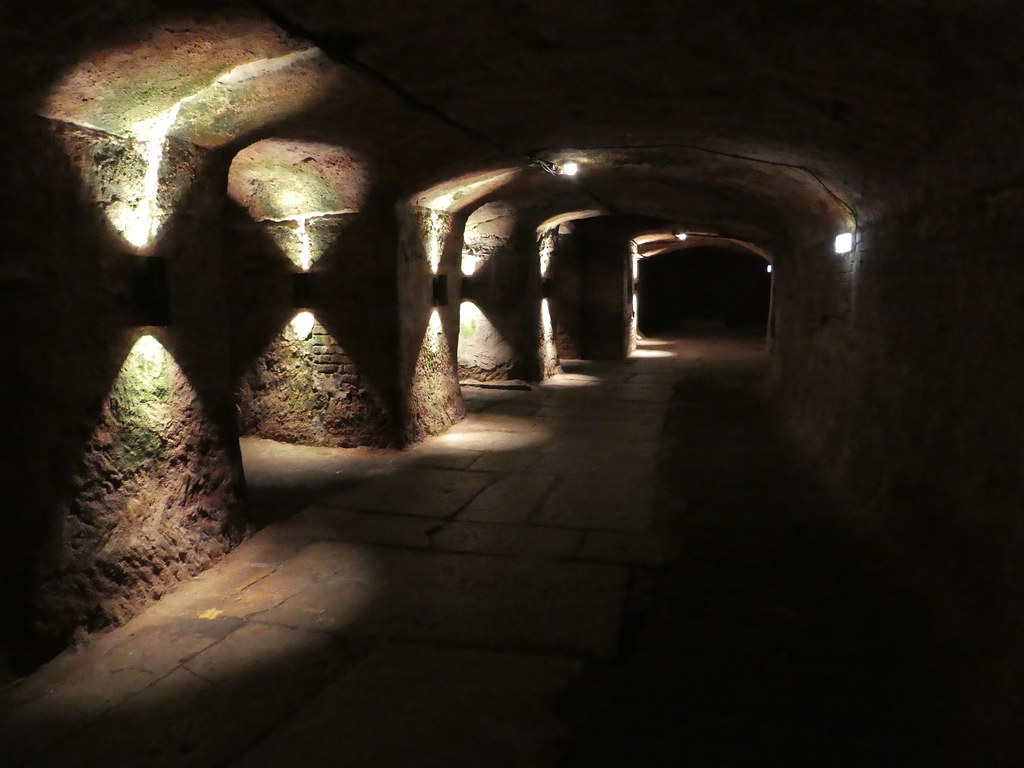
The tunnels hewn out of sandstone were where the fermentation and storage of beer took place in the 14th century. At that time there were more than 40 breweries which was a considerable number for a population not exceeding 30,000. As there was a law requiring everyone who wished to produce beer to have a beer cellar this is how the underground labyrinth of Rock Cut Cellars came about.

Nowadays only a small section of the cellars are still used for storing beer. As well as finding out about the history of the cellars and how they were built we also learnt about the fermentation process and how the cellars were used for local people to take shelter during WW2 bombing raids.

The tour lasted approximately 70 minutes and ended back at the brewery courtyard where we were shown into the Ayrer’s whisky distillery. Surrounded by oak barrels we learnt about Franconia’s very own single malt whisky and its fermentation process. I knew that this part of Germany was famous for its beer but hadn’t realised that it also produced an award winning single malt whisky.

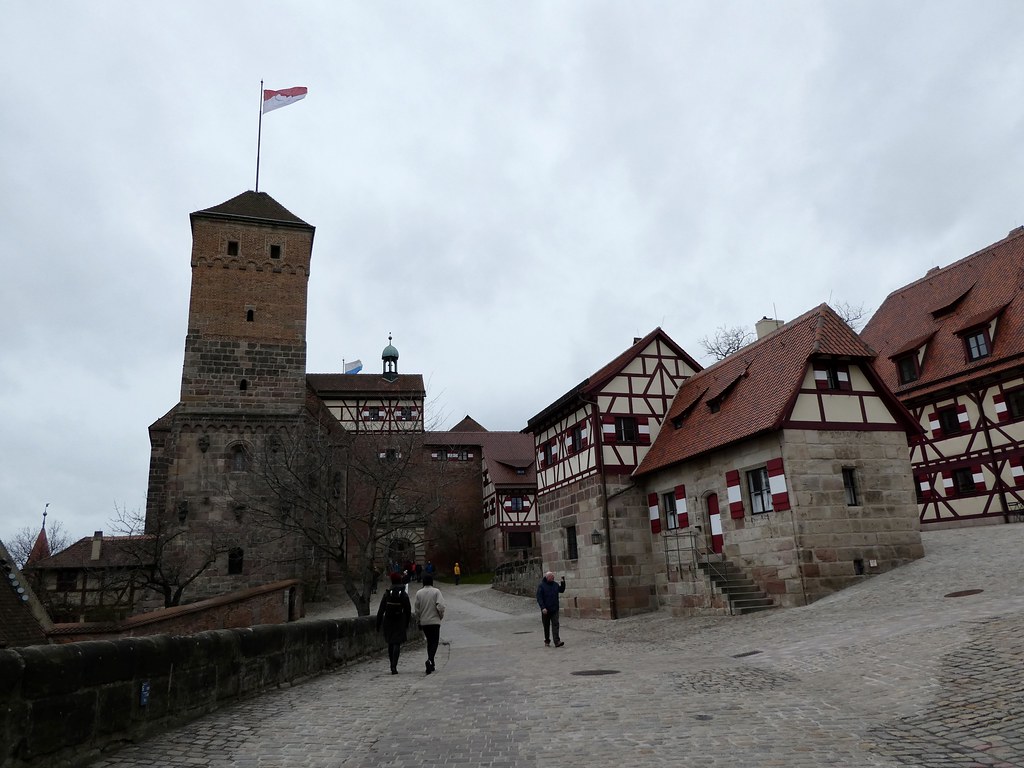
It was then just a couple of minutes walk uphill to our next destination, the Imperial Castle (admission €5.50). Nuremberg’s castle was one of the most important Imperial palaces of the Holy Roman Empire in the Middle Ages and its residents were loyal to the empire’s cause. The castle was so well fortified that it acted as a safe base for the head of the empire.
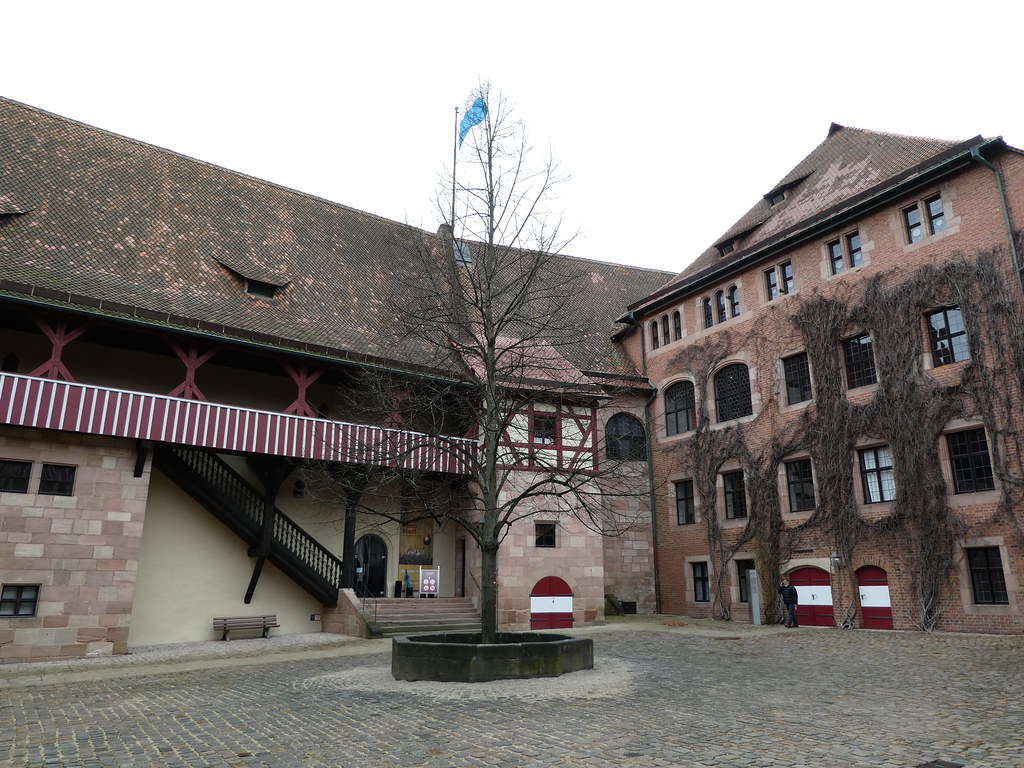
During the Second World War much of the castle was destroyed with the exception of the Romanesque Gothic section and the Double Chapel but was later sympathetically rebuilt.

We took a self guided tour of the historic rooms which commenced in the Kaiserburg museum detailing the castle’s history and displaying medieval armour and weapons.

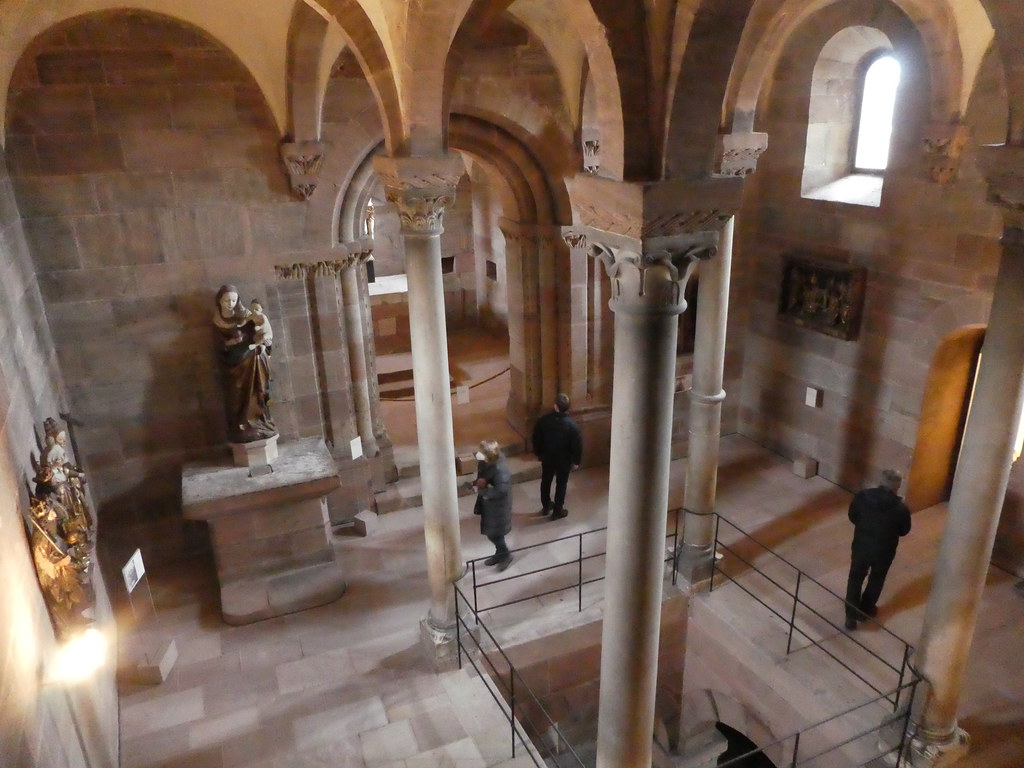
The tour then led us into the Knight’s Hall where emperors met important visitors and where legal matters were attended to. Next we viewed the Corner Chamber with its Imperial Crown Jewels and an impressive wooden model of the Altstadt before moving into the elaborate Double Chapel.
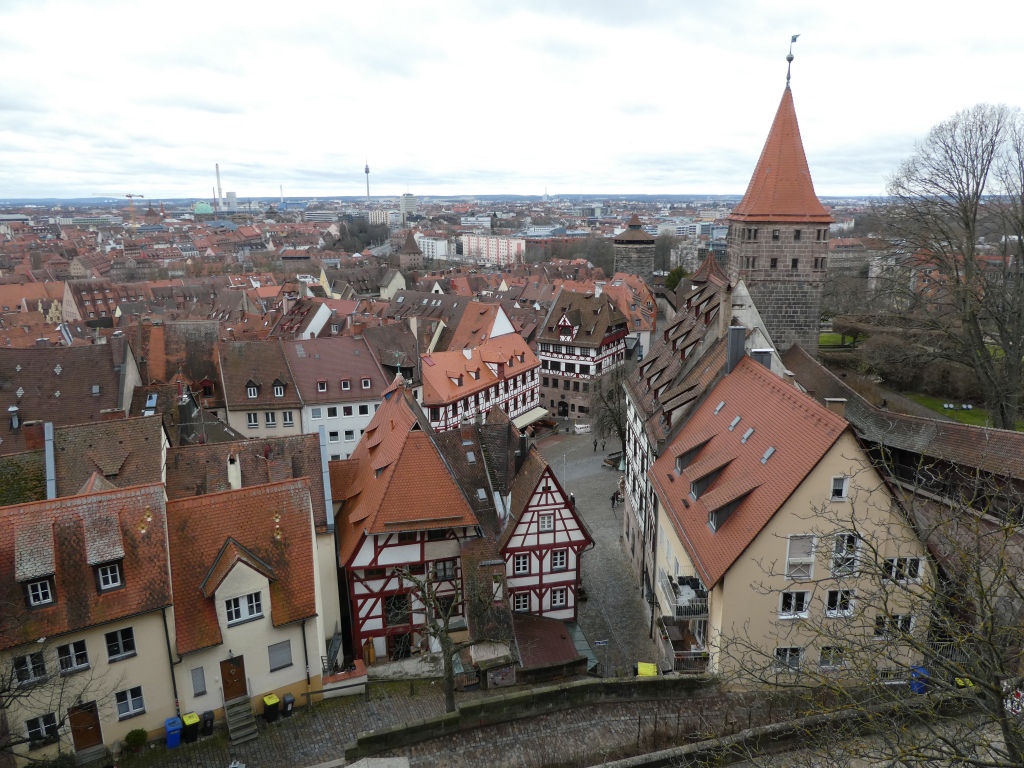
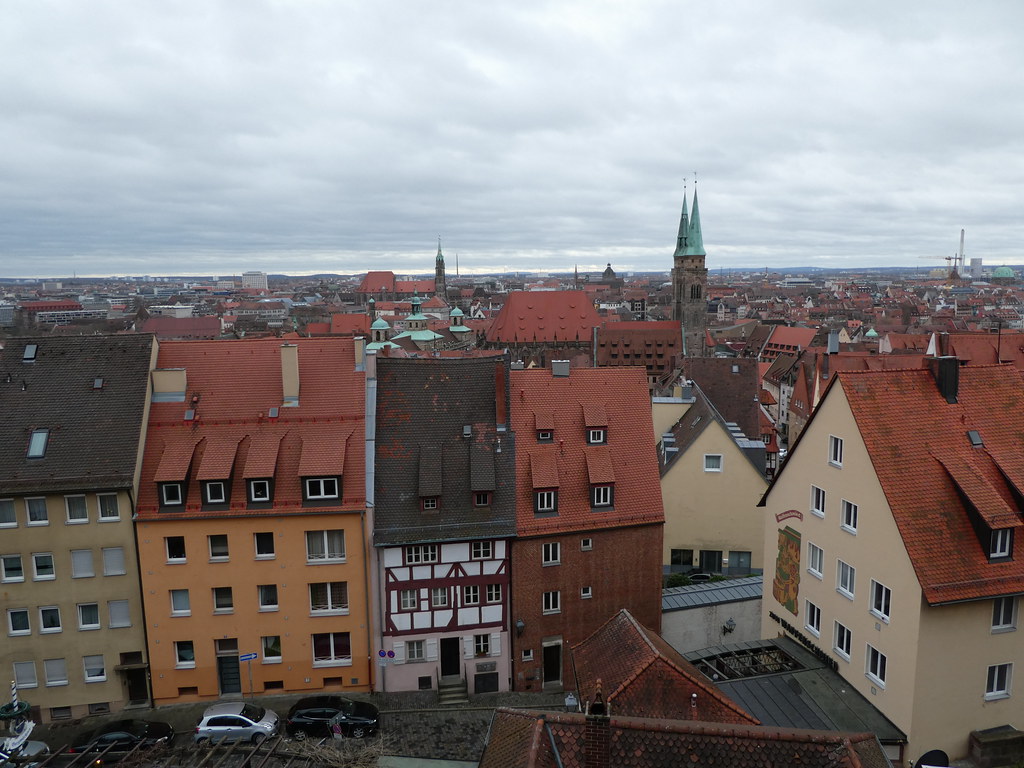
Despite the weather being a little gloomy we enjoyed some good views from the ramparts looking down onto the red rooftops of the old town.
Exploring the Imperial Castle had been memorable and I’m so pleased we’d had an opportunity to visit.
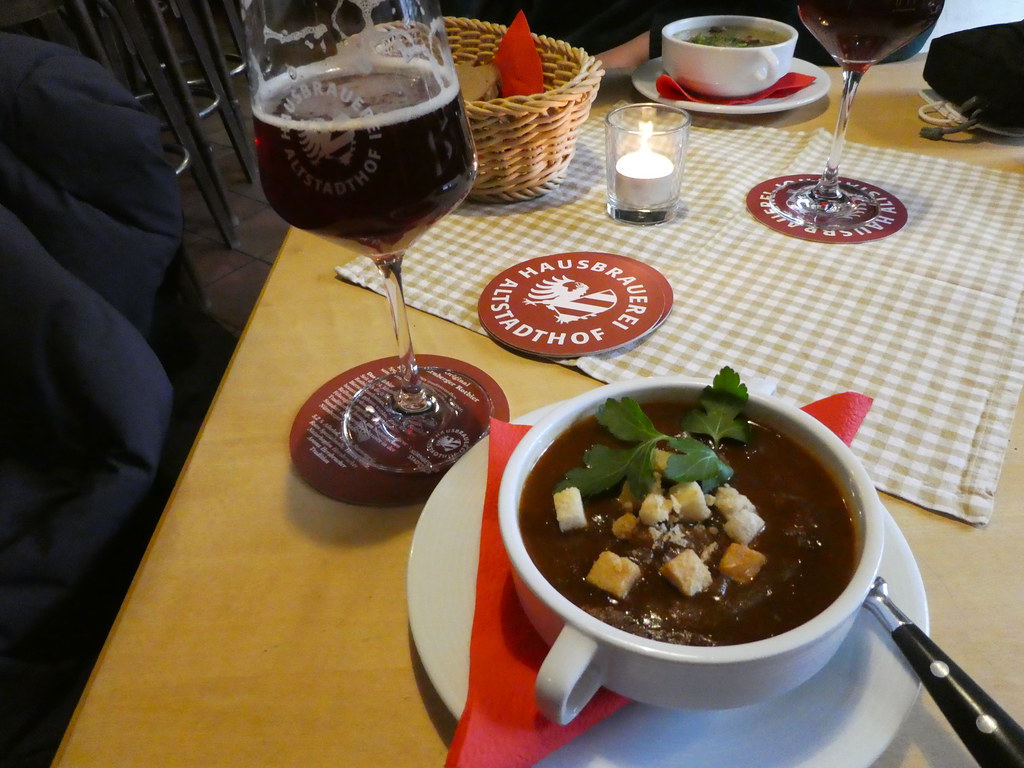
Leaving the museum we wandered back downhill and popped into Hausbrauerei Altstadt a traditional pub next to where we had taken the Rock Cut Cellars tour earlier. Here we enjoyed bowls of steaming hot soup and glasses of their red beer which hit the spot nicely and set us up for an afternoon of sightseeing.

It was then just a short walk through the old town to Fembo House City Museum, located within a large Renaissance period merchant’s home constructed between 1591-1596 (admission €6). The façade of the building suffered only minor damage and was converted into a museum in 1953.
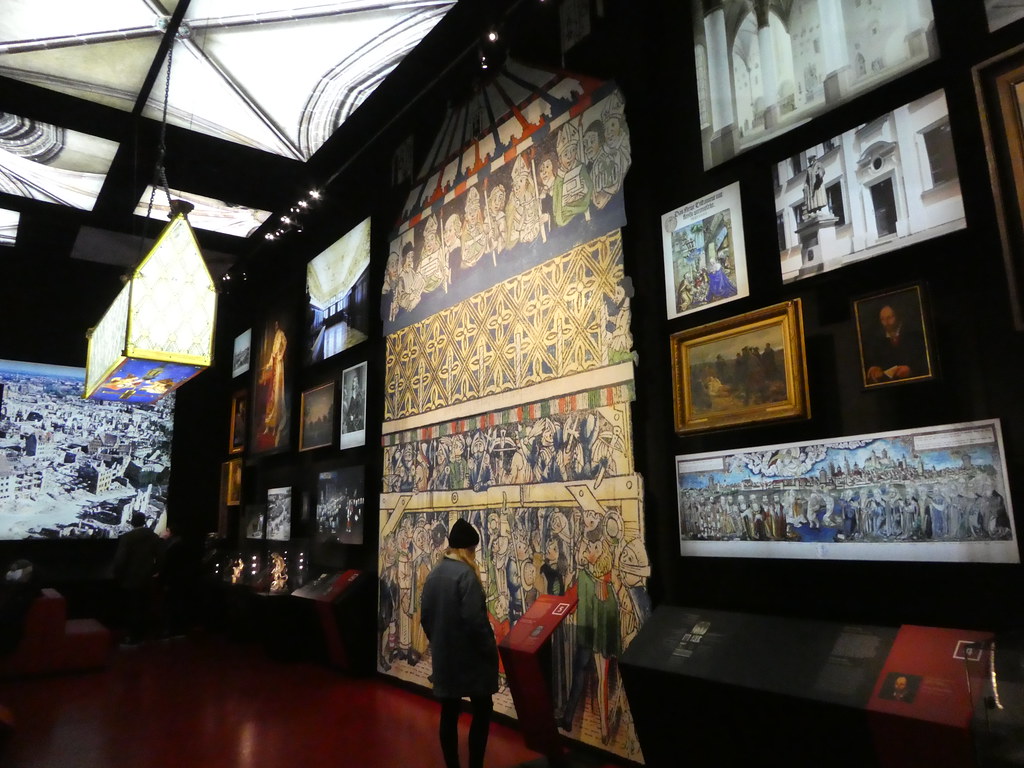
After picking up audio guides we toured the exhibition rooms which took us on a journey through the city’s past bringing 950 years of Nuremberg’s history to life. Our self-guided tour passed through beautiful wood panelled halls and rooms filled with such items as period furniture, ceramics and old maps.

Leaving there we crossed the Pegnitz River to take a look in the state of the art glass fronted Neues Museum which we’d noticed the previous day. Its striking modern architecture blends in surprisingly well with the medieval walls surrounding it. Admission to the museum is €7 reduced to €1 on Sundays.

The idea of the museum is to combine contemporary art and design into one museum covering the period from the 1950’s to the present day. Firstly we viewed the permanent exhibitions on the ground floor which focus on abstract geometric designs and concrete art.
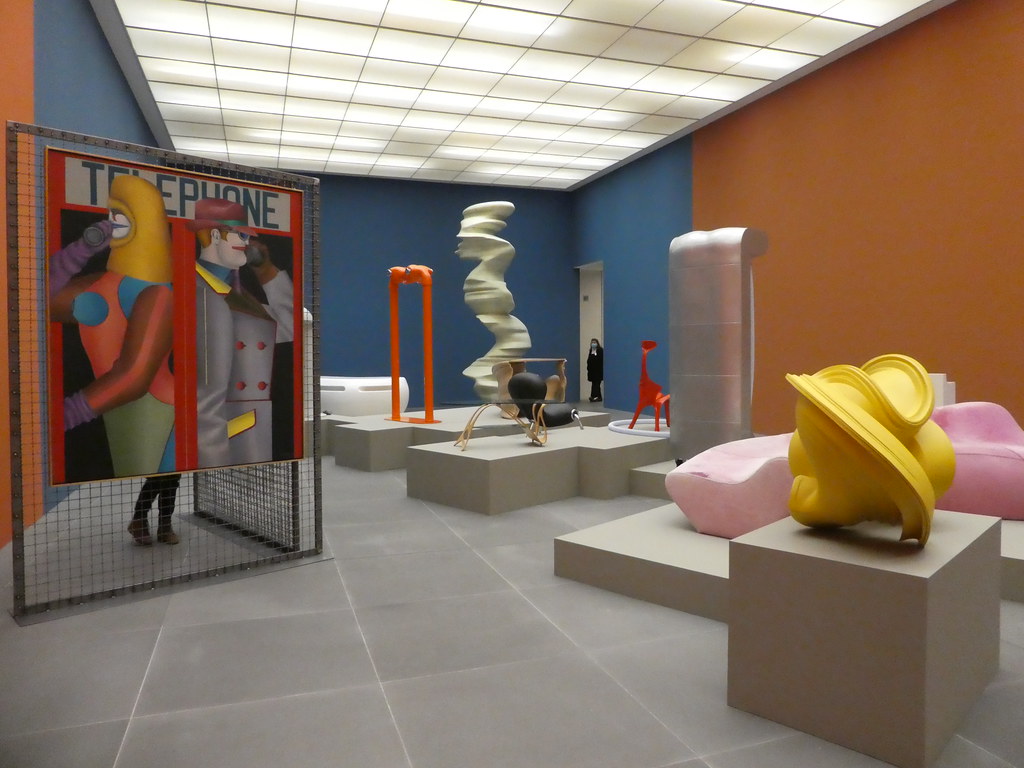
Amongst the art work, one exhibit that caught our eye was the plastic bag Günter Fruhtrunk was commissioned to design for Aldi-Nord in 1970. Remaining in use until 2018, this blue and white block design became an everyday icon and the striped arrangement of the pattern, an inspiration for other artists.

We then mounted the wide spiral staircase leading to the upper floor to view a temporary exhibition, Lightsome by Keith Sonnier (1941-2020). Sunnier was one of the first to use neon light in sculpture with his work consisting of numerous neon creations.

After completing our tour of this ultra modern museum we then took a step back in time at our final museum of the day with a visit to the Germanisches National Museum.

We had looked forward to our arrival here for more than one reason as we’d arranged to meet Marcus, a fellow blogger and highly talented photographer. Our blogs were both established over six years ago and we have avidly read each other’s posts ever since. In fact, it was viewing Marcus’s stunning photographs of Nuremberg that had inspired me to visit this beautiful city. If you haven’t already come across Streets of Nuremberg I recommend taking a look as it not only includes amazing cityscapes but also provides inspiration and useful advice to enhance photo taking skills.
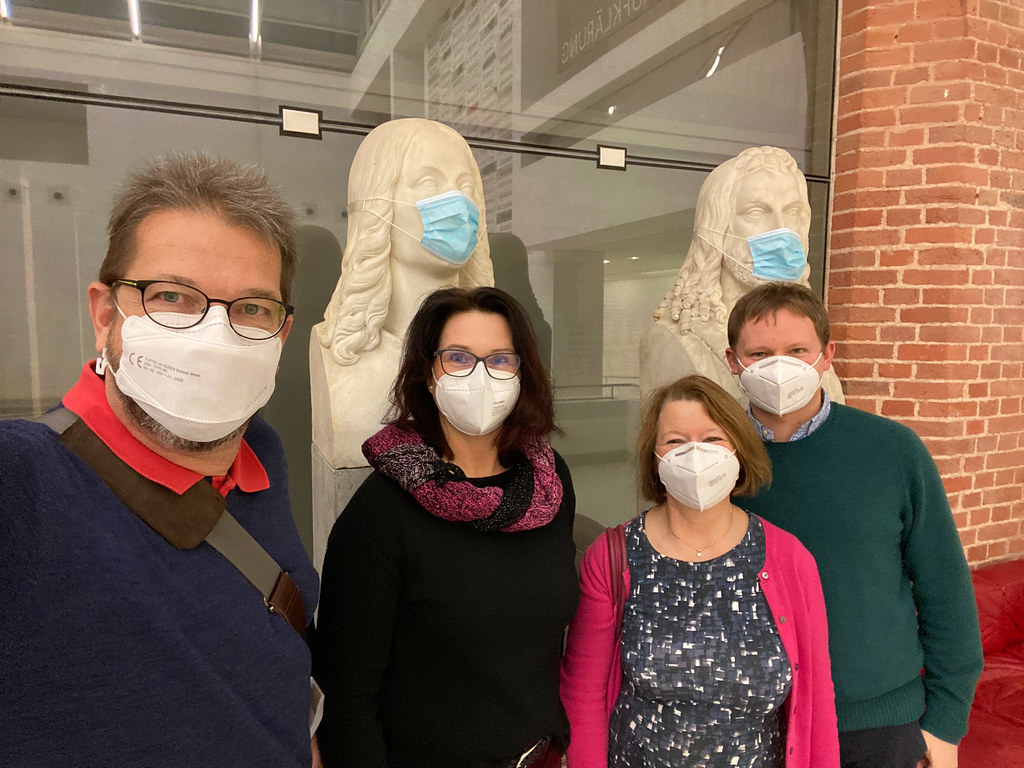
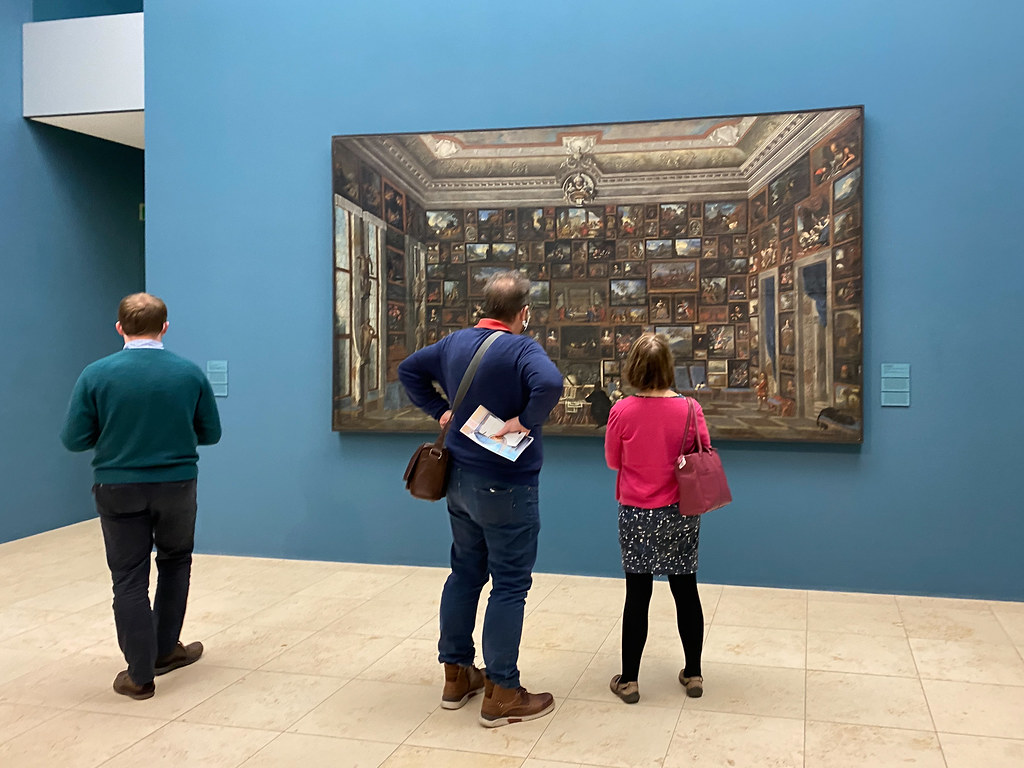
After greeting Marcus and his wife in the foyer they treated us to a highlights tour of this vast museum, the largest in the German speaking world dedicated to cultural history and art (standard admission €8). The building itself is a blend of old and new from its modern entrance hall through to its original building in a 14th century cloister.

The entrance lobby features a piece of art work entitled ‘Hauptstadt’ created in 1993-4 formed from a collection of Berlin street signs, some still in good condition whilst others show signs of wear and tear.
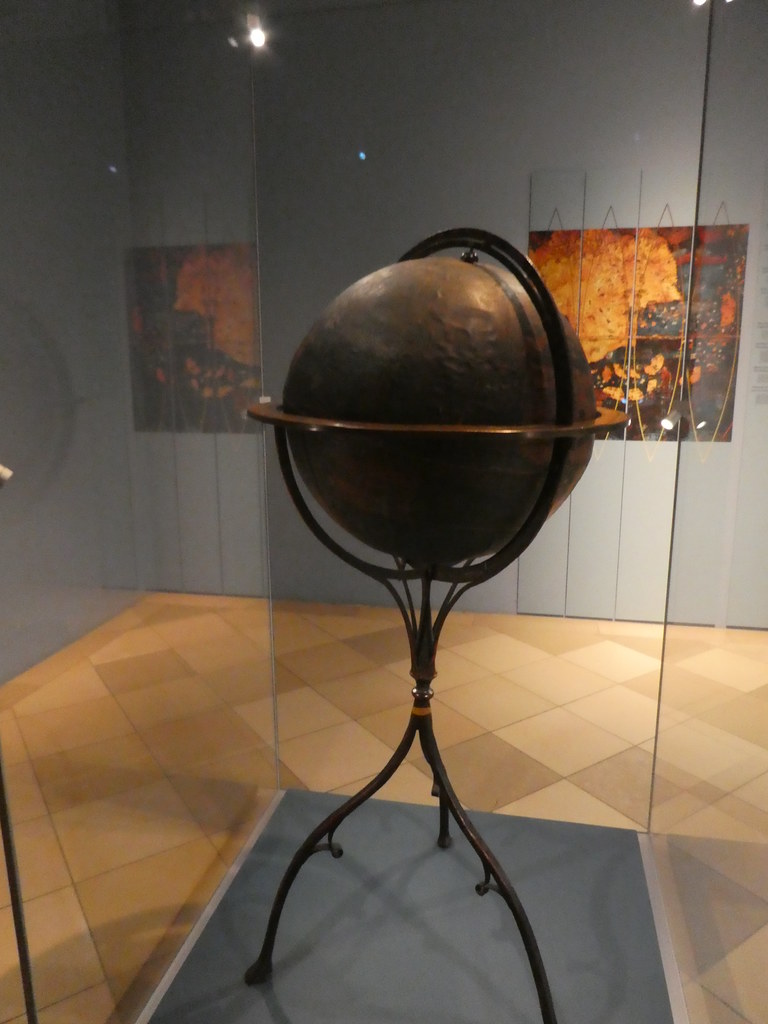
We viewed works by Albrecht Dürer whose house we had visited at the start of the day and looked in awe at the Erdapfel, the oldest surviving globe in the world which was produced between 1490/91 even before the America’s had been discovered.
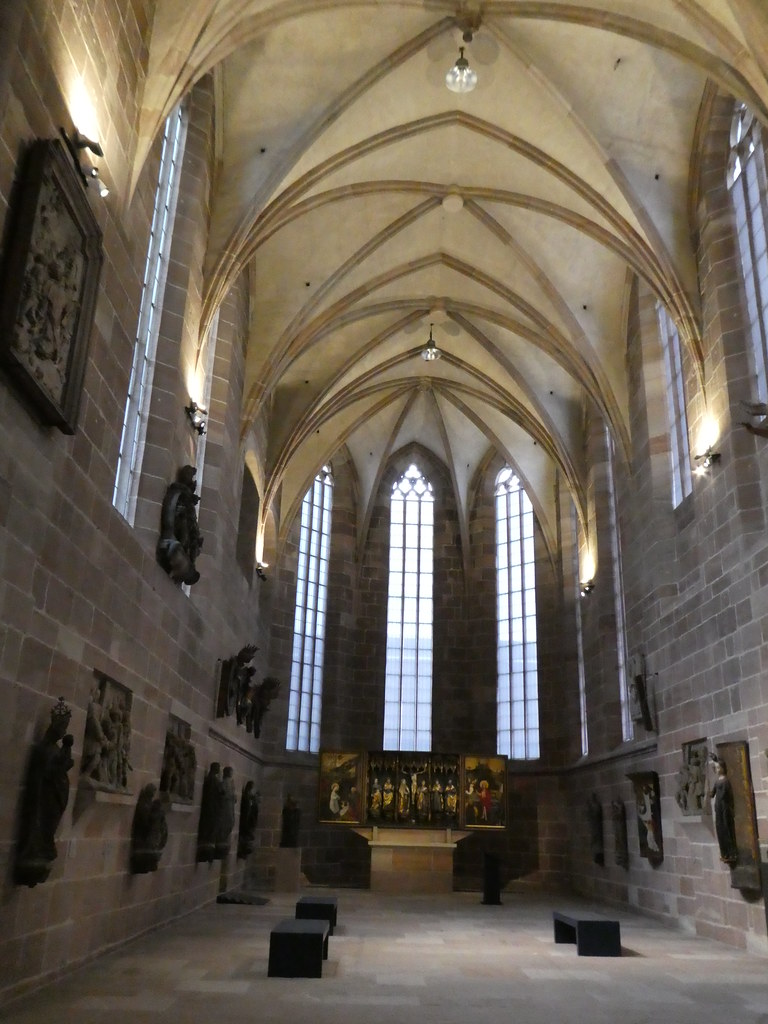
A connecting door leads through to the magnificent former Carthusian monastery dating back to the late Middle Ages adorned with stone sculptures and religious regalia.

In other sections we glimpsed rare Baroque dolls houses, a golden headdress of a Bronze Age priest that had been unearthed not so long ago in a farmer’s field and one of the largest displays of historical musical instruments in Europe. I believe it would have been impossible to see everything in one visit but during our 90 minute tour we managed to view some of the museum’s finest treasures.
We left the museum just as it was closing its doors and our fun meet-up with Marcus and his wife wasn’t yet over as they had reserved a table for the four of us at Schäufelewärtschaft, a restaurant favoured by locals tucked slightly off the beaten track yet no more than a 20 minute walk from the centre.

The wood panelled restaurant had a homely atmosphere with its walls adorned with pictures of pigs as the restaurant specialises in traditional Franconian dishes. Over glasses of locally brewed beer we studied the menu but the decision was simple as we couldn’t come to Nuremberg without sampling the local favourite Schäufele (pork shoulder).

After bowls of soup with meat balls our main courses arrived and the pork shoulder even exceeded our high expectations being perfectly cooked, tender and delicious. I can’t even begin to describe how good the pork crackling was as we savoured every mouth-watering forkful. Portion sizes were generous and our mains came with a potato dumpling and a tasty dish of gravy. We completed our meal with desserts of apfel strudel and kirschmichel, a delicious cherry pudding served with vanilla sauce.
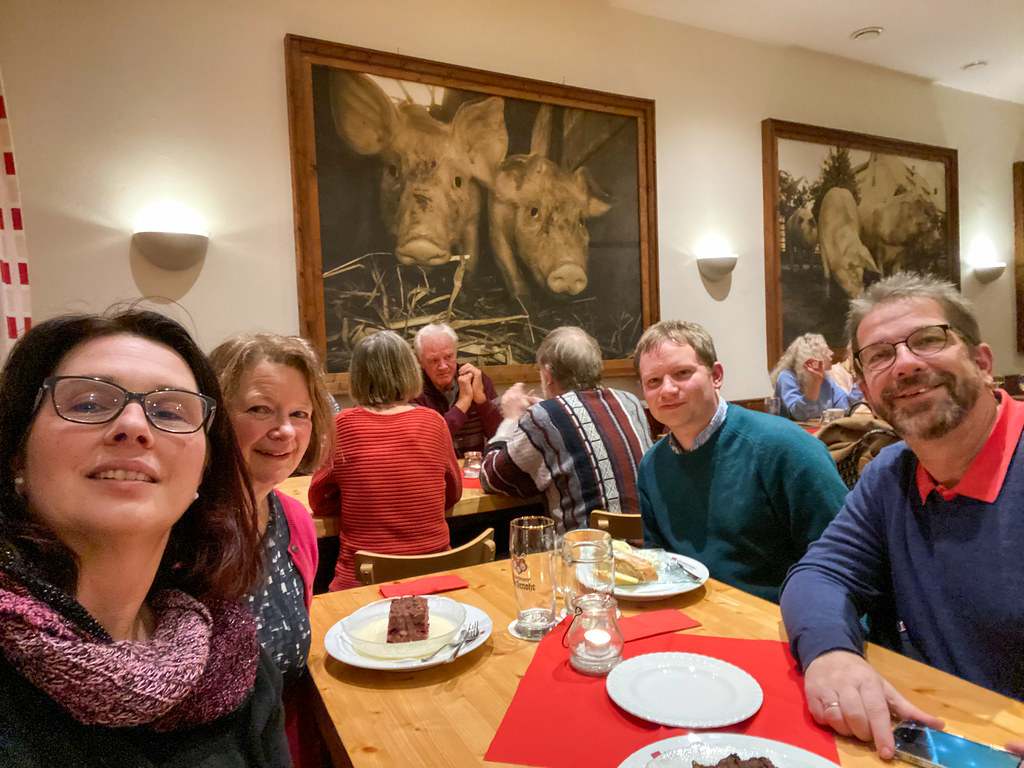
Not only was the food spot on, the company was too as we all chatted away together in a relaxed manner as if we’d known each other for ages. We’d met five hours earlier as virtual friends and ended the evening as real friends. We were so pleased that we’d had an opportunity to meet and hopefully our paths will cross again sometime in the future for more lovely get togethers! The end of a memorable day in beautiful Nuremberg.
If you have enjoyed reading this post you may also like:




 Love Travelling Blog
Leave a reply to alicia | metasparks.blog Cancel reply