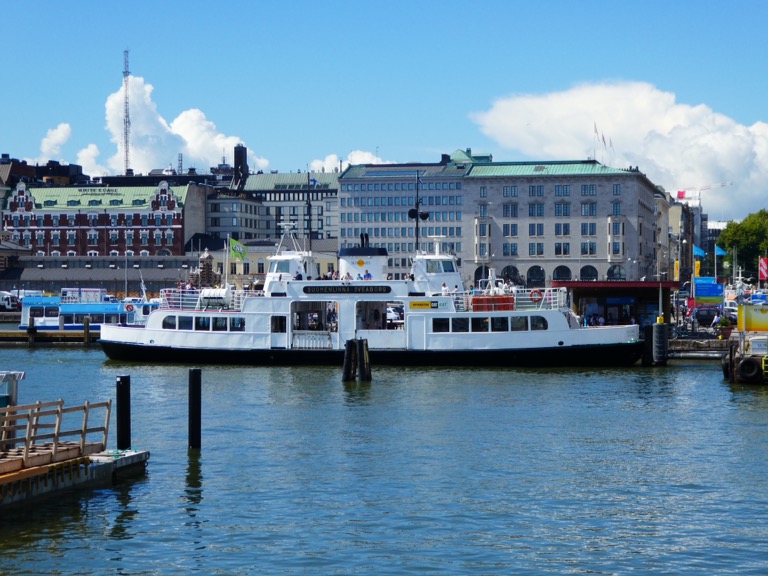
From Helsinki’s bustling marketplace (Kauppatori) boats depart to Suomenlinna Island taking around 15 minutes. The HSL ferry is operated by Helsinki Regional Transport (HSL) and all HSL tickets and travel cards are accepted.

If you need a ticket, be sure to buy one before boarding the ferry as they are not sold on board. Ferries depart up to four times an hour depending on time of day and season, details can be found here. A second company, JT Line Waterbus also operate regular services from a little further along the quay.
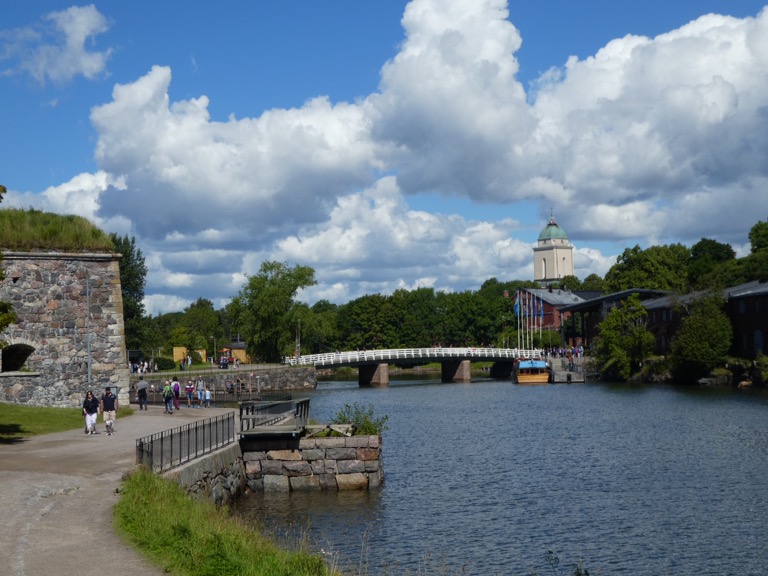
In 1991 the Suomenlinna fortress gained UNESCO World Heritage status as a unique monument of military architecture. The fortress has served in the defence of Sweden, Russia and Finland over the course of history. The World Heritage Site is composed of six islands.

Suomenlinna was originally known as Sveaborg when Swedish construction began in 1748 to fortify the islands off Helsinki. The Swedish era continued for 60 years until 1808 when the island was besieged by the Russians in the Russo-Swedish war. The island, ships and associated equipment were transferred to the control of the Russian Imperial Government and the island became known as Viapori. The following year Finland became an autonomous Grand Duchy of Russia with the island remaining as an army base under Russian control. Following the Russian Revolution and Finland’s independence in 1917 Viapori was taken over by the newly founded Finnish Government in 1918 when it was renamed Suomenlinna meaning ‘Castle of Finland’.

Leaving the ferry we walked through a pink stone archway with a clock tower above which leads onto the main pathways through the island. On the left, we passed Suomenlinna Church which was built to serve as a Russian Orthodox garrison church. Interestingly, the church serves a dual purpose as its steeple is used as a lighthouse for the island! We then came to the Island’s Museum and Visitor Centre before crossing a white painted wooden bridge towards the far side of the island. It’s often breezy on this exposed footpath but on this occasion it was warm and still. Mounted high on the cliff tops is the original bastion fortress together with the late 19th century Russian defence line, complete with sandbanks and artillery emplacements.
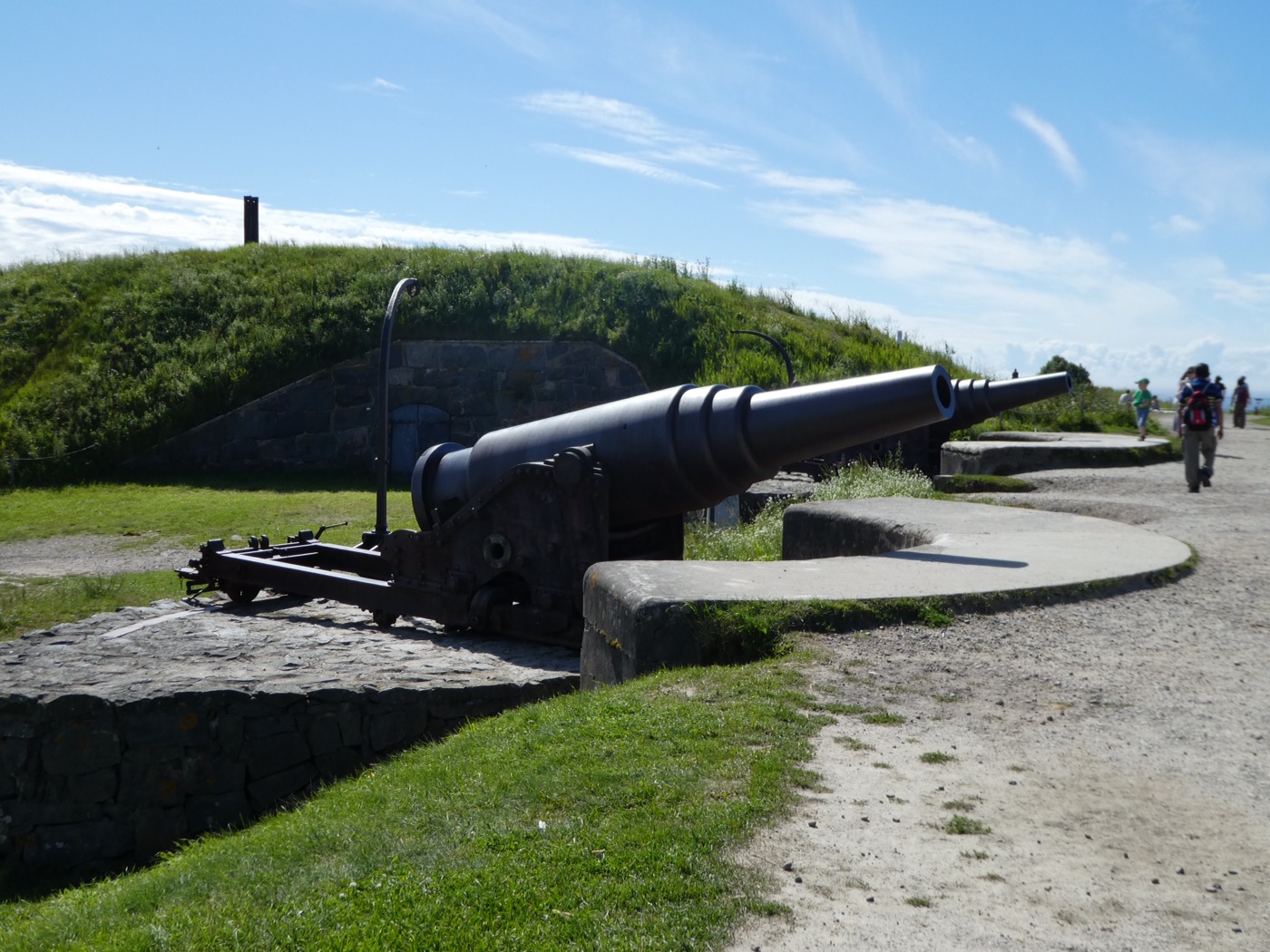
Continuing along the coastal path we came to the King’s Gate, the iconic symbol of Suomenlinna (undergoing maintenance so I have not included a photo). It was built as a ceremonial gateway to the fortress on the site where a ship carrying the fortress’s founder King Frederick of Sweden was anchored whilst he inspected the construction of the fortress in 1752.

The return ferry was much quieter and we enjoyed good views on our way back to Helsinki’s market square. The pastel coloured buildings and the bright orange and white canvas roofed market stalls looked beautiful in the sunshine with the cathedral standing proud behind (just a shame about the ugly crane in the foreground).
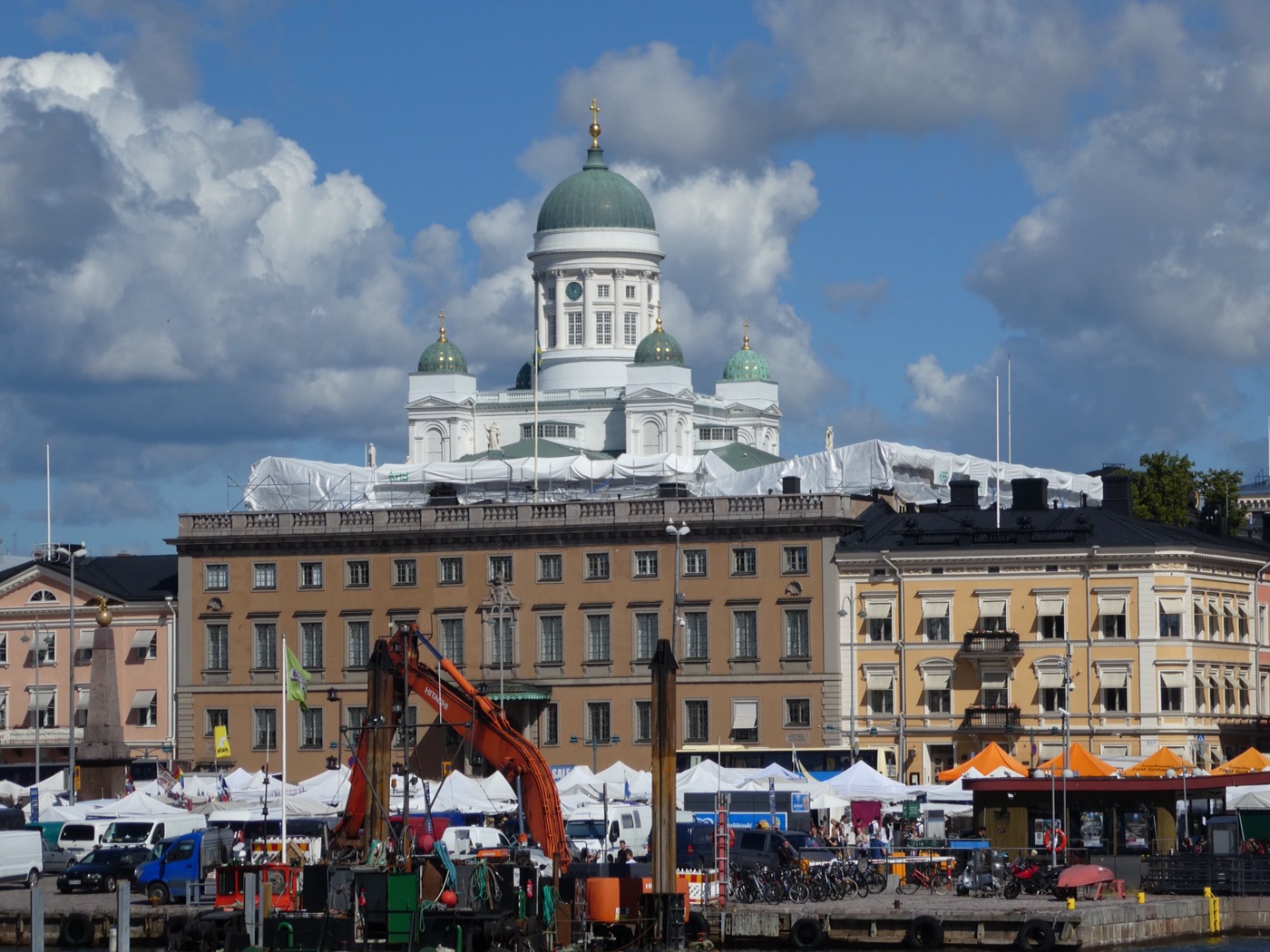
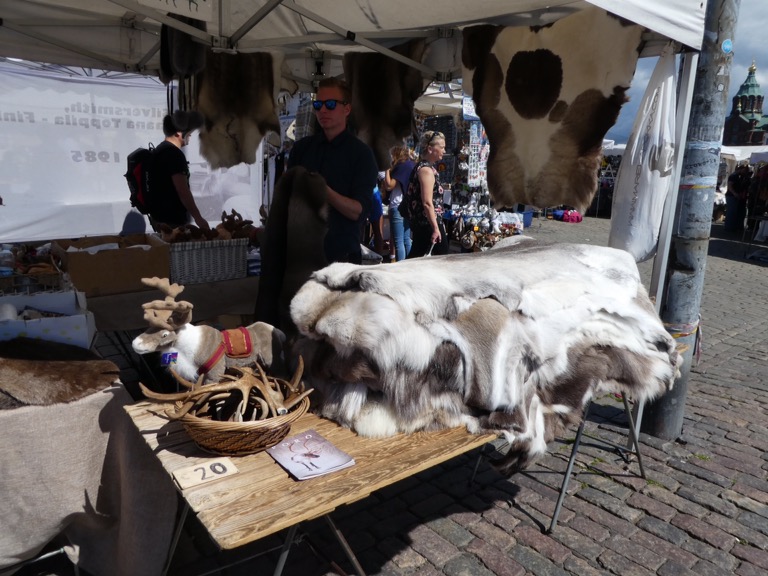
Back on shore, we wandered around the market stalls which were bustling with activity. As well as usual market items such as fruit and vegetables you can buy freshly caught salmon and the local small fried fish ‘muikku’ which is rather like a herring. There are plenty of souvenir stalls selling anything from reindeer skin rugs to traditional small wooden Lapland cups which seemed popular with the cruise day trippers.
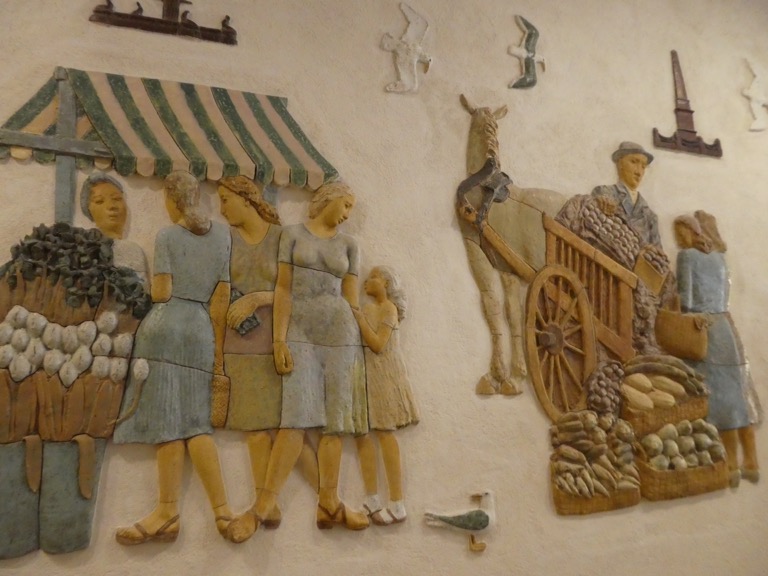
Feeling hungry, we decided to eat lunch in the City Hall lunch restaurant just across the road from the market. A lunch buffet is served here on weekdays which includes main course, salad, dessert and coffee. It’s lovely and quiet yet just steps away from the busy market place. Below you can see part of the attractive restaurant wall mural which depicts the market in bygone days.
We returned to our apartment for a rest then later enjoyed an evening stroll by the sea.
If you have enjoyed reading this post you may also like:
Kamppi and Herttoniemi, Helsinki


 Love Travelling Blog
Leave a reply to Rashmi Gopal Rao Cancel reply