
From our base in Luxembourg’s city centre it was just a 40 minute drive to the Müllerthal region which is often referred to as Little Switzerland due to its hilly landscape and beautiful hiking trails.
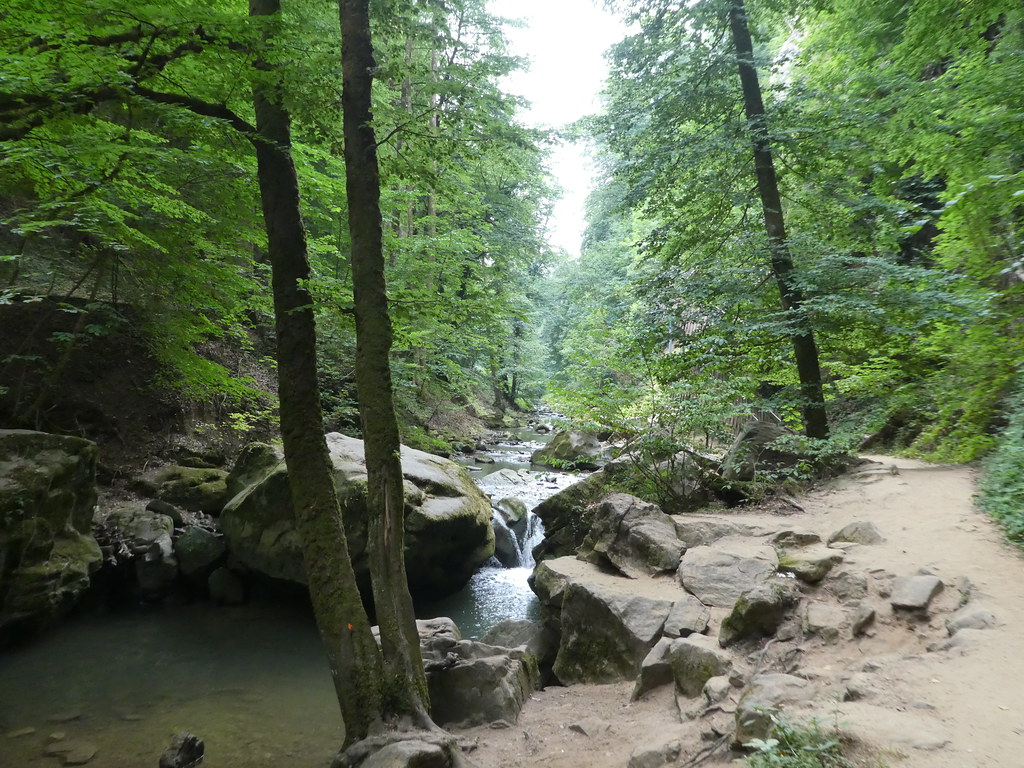
Our first stop was at the Scheissendempel Cascade located on road 121 close to Müllerthal. We parked in a small free car park just across the road from the start of the 500 m trail to the waterfall.

This is part of the Müllerthal Trail which stretches for 112 km through the rocky landscape. The waterfall can be accessed either from the road or along the trail so we decided to take the scenic trail one way and then to make our way back along the road.

The path was quite stony but as it had been so dry, was quite easily manageable with well maintained wooden boardwalks and flights of steps in places. Soon we reached the waterfall on the Black Ernz river alongside a sandstone bridge. This was constructed in 1879 and since then has become the symbol of the region. It’s not a very high waterfall yet with the combination of the ancient bridge and spectacular rock formations is very scenic and worthy of a detour.

From there, we drove a further 30 minutes to Beaufort Castle, constructed in four different stages between 1050 and 1650. In the beautiful countryside of Beaufort it’s possible to visit not only one but two castles as they are located side by side. These two castles are set in a wooded valley on the edge of the small town. After leaving our car in the small car park across the road we collected our tickets €10 (£8.79) each to include both the medieval and renaissance castles, also included in the Luxembourg Card.
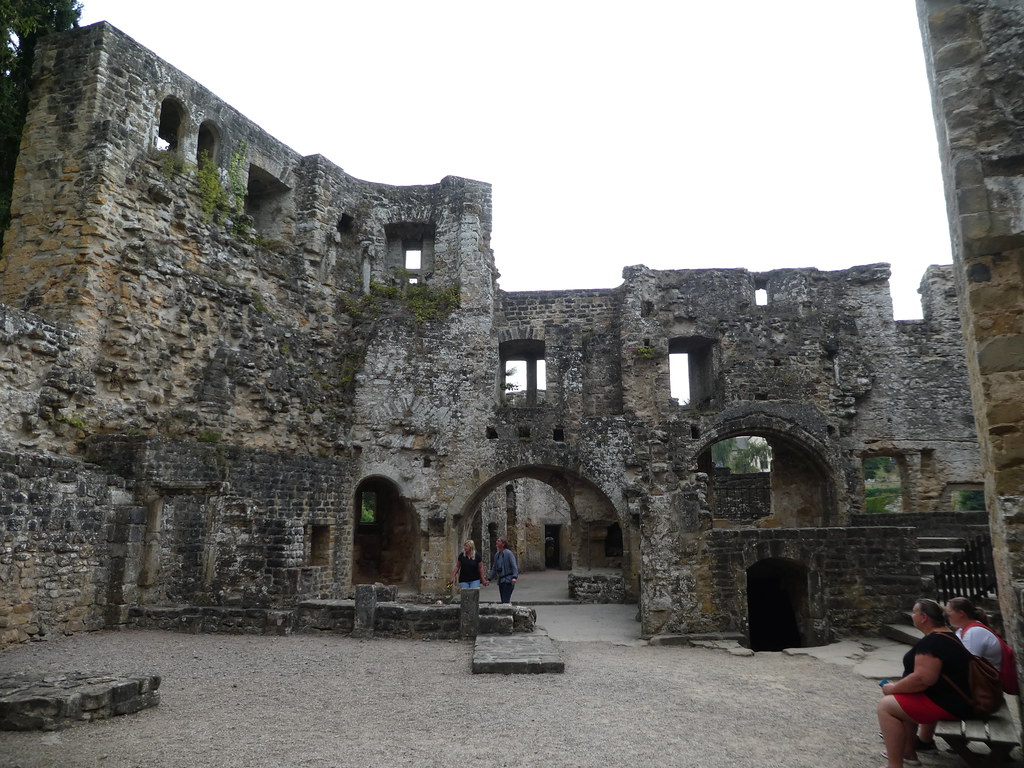
We began our visit with a self guided tour of the ruins of the medieval castle which was built from sandstone on the site of a Roman camp. We explored its many levels from down in the dungeons and torture chamber and then up to the surviving turrets by following numbered signs with detailed information and a map from a leaflet we’d been given.
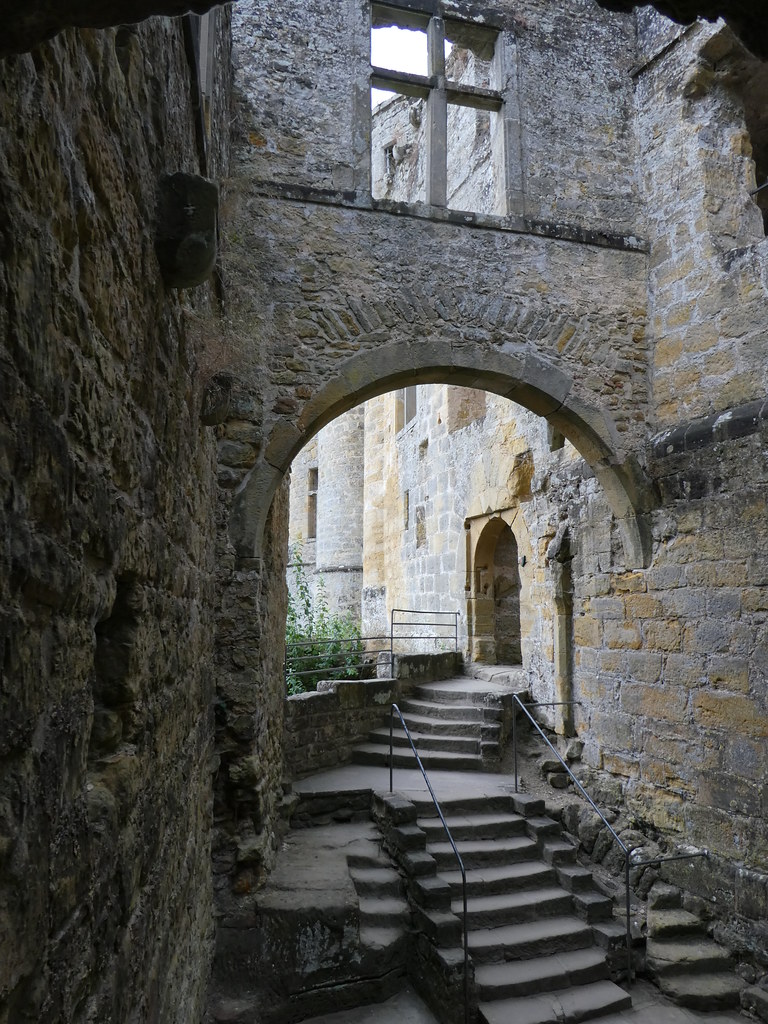
The medieval castle had several owners over the years but once uninhabited it fell into disrepair. Some of its stone work was then used as a quarry by the residents of the surrounding area. In 1928 major renovations took place and four years later the castle was able to open to the public.

Located behind the ruined castle is the renaissance castle which was built in 1558 and never damaged. Over the centuries with the exception of s few minor additions and modifications it has remained virtually unchanged.

This castle was last inhabited by Anne Marie Linckels until her death in 2012 at the age of 98. Visits are by one hour guided tour with ours taking 90 minutes as our helpful guide Diana spoke in both German and English.
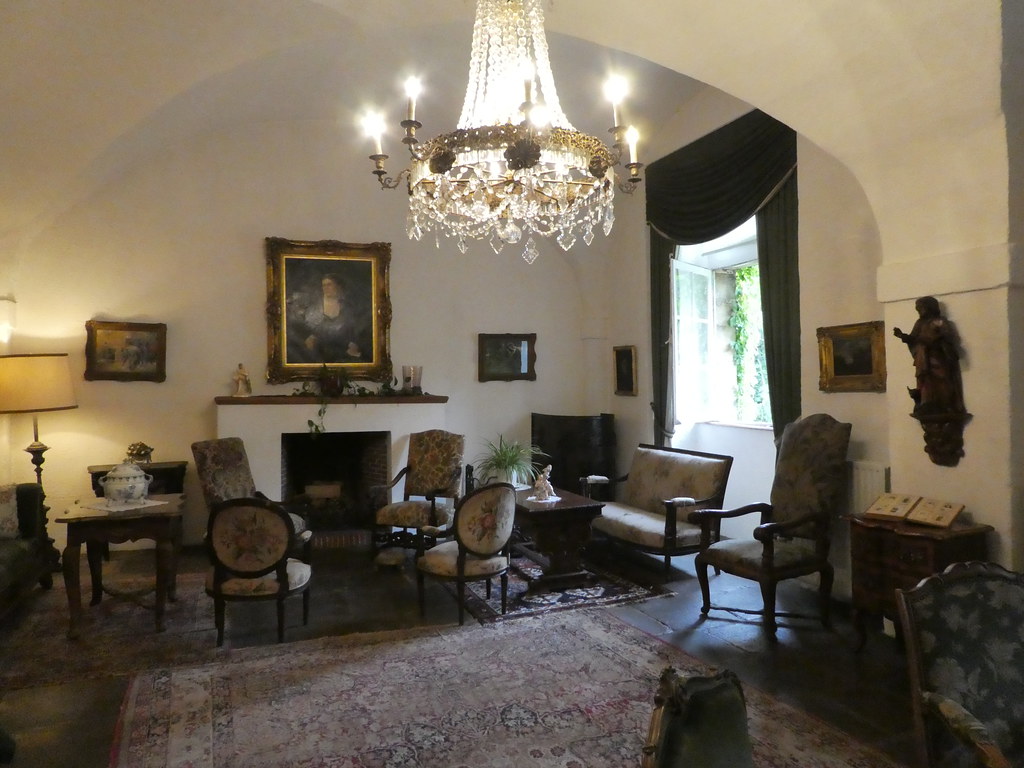
We were shown the beautifully furnished rooms, gardens, stables and distillery which have all been maintained in the same condition as when they were occupied by the last owners.

After the end of the tour we were invited to sample the famous Cassēro liquor that is still produced in the castle today.

To complete our tour of the scenic Müllerthal district we then visited Echternach, the historic centre of the region which has retained its medieval beauty. We decided to park on the edge of town at the free park and ride and then take a bus into the centre from there.
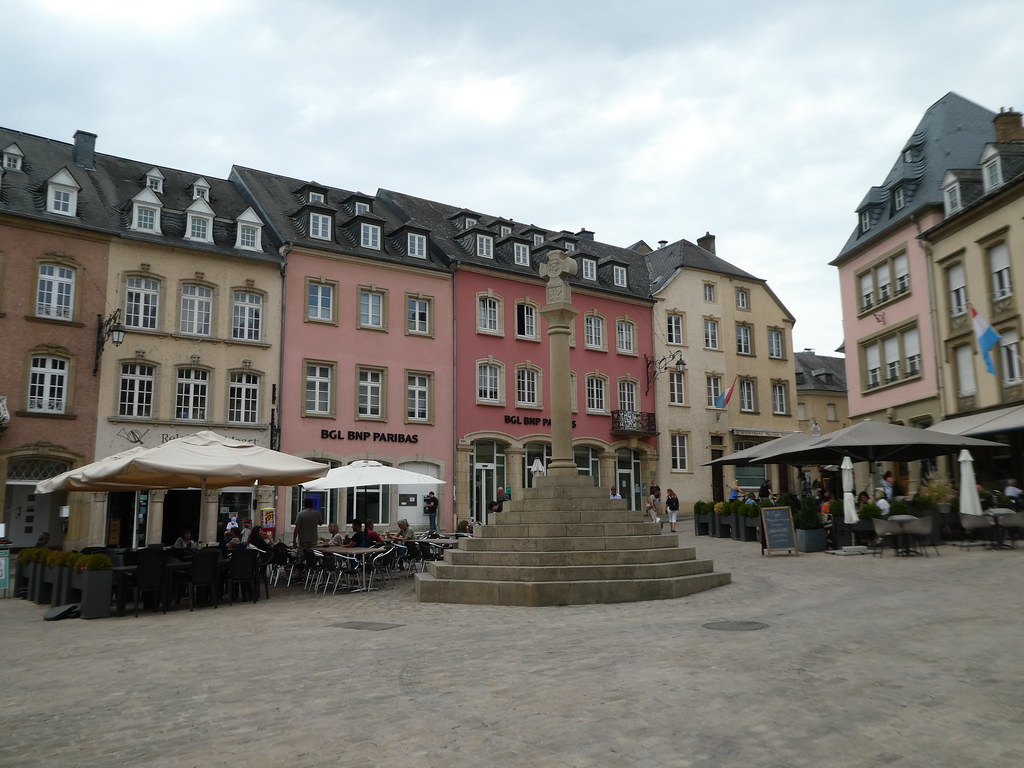
This small town which is the oldest in Luxembourg, has a beautiful cobblestone market place surrounded by historic buildings. The Cross of Justice stands to one side representing the sovereignty of the abbots over the city bourgeoise.

Close by stands the imposing Romanesque basilica originally built in 700 but destroyed by fire in 1031. After re-building, it then suffered severe damage during the Second World War and was reconstructed once again in 1952. We explored its Gothic aisles and stained glass windows that portray the life of St. Wilibrond. Willibrond was born in northern England and lived as a young monk in Ireland. In 1690 he crossed into Europe to undertake missionary work and noblemen granted him the land in Echternach to build its abbey and basilica.

The crypt houses his tomb with him being the only saint to be buried in Luxembourg. Within the abbey in a side nave is the small museum ‘Documentation of the Dancing Procession”. This tells the story of the dancing or hopping procession which takes place at Whitsuntide each year. It is a UNESCO World Heritage cultural tradition and attracts many people from across the region.
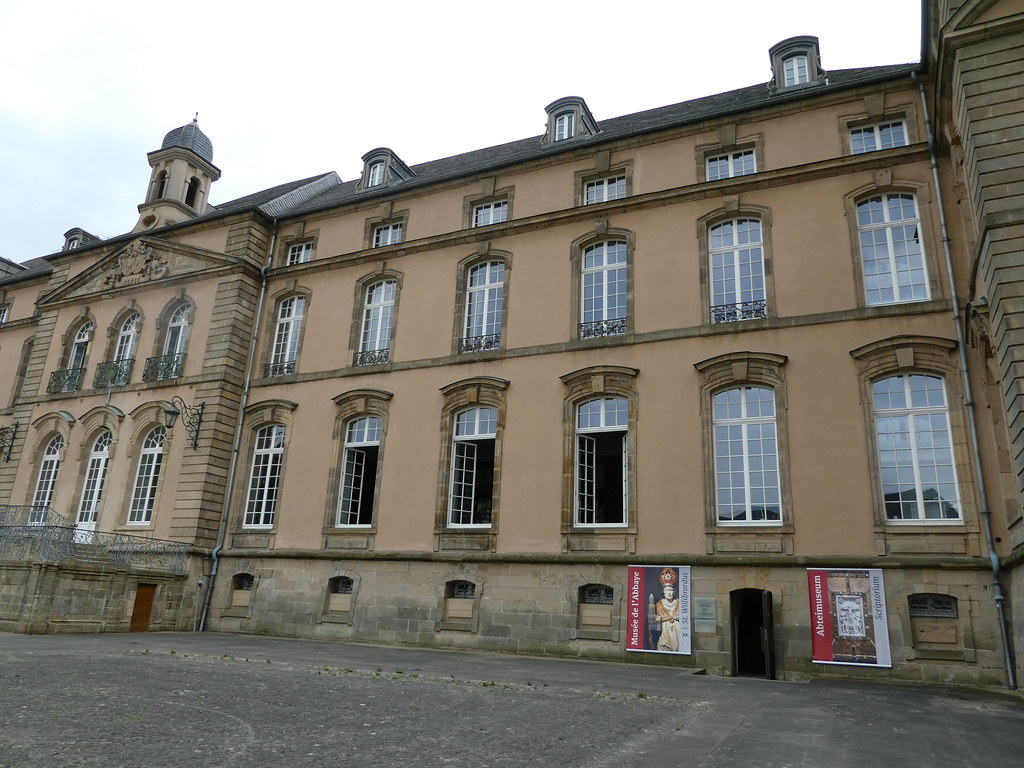
Nearby stands the abbey museum, entrance €3 (£2.64) and also included in the Luxembourg Card. It is located in the vaulted cellars and is mainly dedicated to the Echternach scriptorium. The decorative first letters of the gospels, painted in gold are outstanding works of art and Romanesque symbolism.

Before returning to the car we enjoyed cups of coffee on the terrace of one of the town’s attractive cafes and then walked over the bridge into Germany as Echternach is bordered by the river Sauer.

On our way back to Luxembourg city centre we called into Ramborn Cider, the first Luxembourgish cider producer. Guided tours of the production process are available most afternoons but as we arrived just before closing time we only had an opportunity to look around the shop. Ramborn Cider ferment the freshly pressed juice of apples and pears grown in local orchards without using concentrates. We bought a couple of bottles to take home with us and then returned to our accommodation after a lovely day exploring the Müllerthal region.
If you have enjoyed reading this post, you may also like:


 Love Travelling Blog
Leave a comment