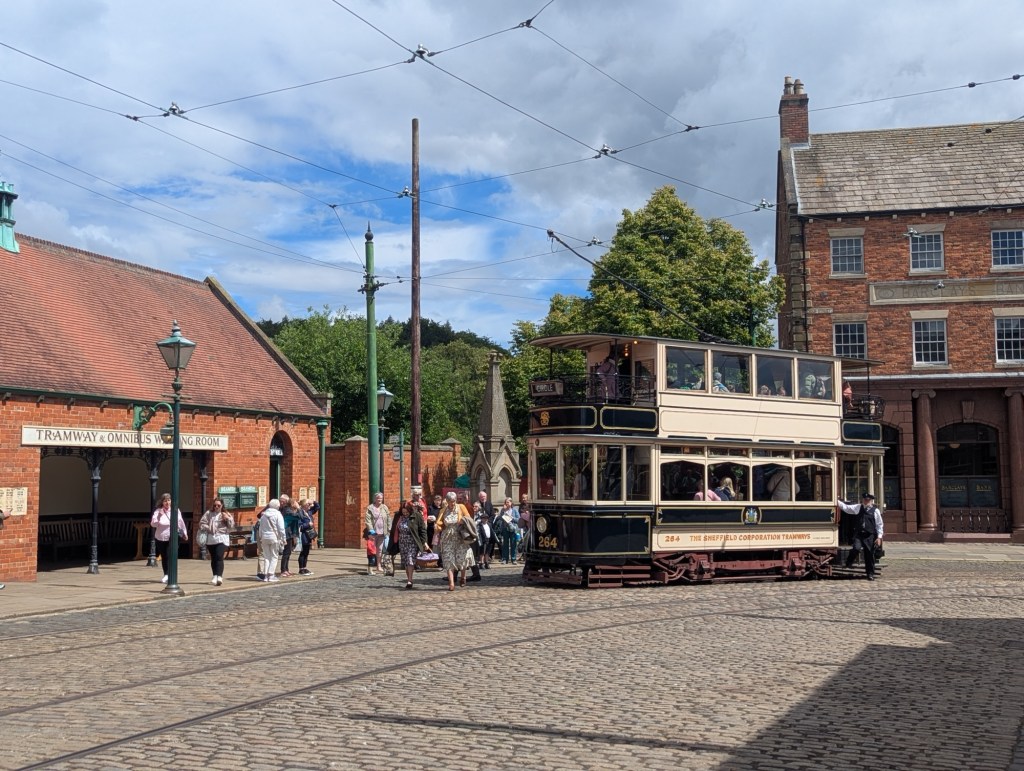
Have you ever wanted to literally walk through a history book? That is exactly what it feels like the moment you step onto the grounds of Beamish, The Living Museum of the North. Spread across 350 acres of beautiful County Durham countryside, Beamish isn’t your typical museum with dusty artefacts behind glass. Instead, it’s a fully functioning, immersive site where the buildings are real, the transport is running, and the history is completely alive. Here is a complete breakdown of our recent visit, along with all the practical details you need to plan your own trip back in time!
Location

Beamish Museum is nestled in the rolling hills of County Durham in the North East of England. The open-air museum is perfectly situated, secluded enough to feel like you’ve genuinely escaped the modern world, yet close enough to major North East cities including Durham and Newcastle to make it very accessible for a day trip.
Getting There
Getting to Beamish is very easy whether you are driving or opting for public transport. If you’re driving, the museum is located just off the A1(M). Motorists simply take Junction 63 for Chester-le-Street and follow the brown tourism signs for Beamish. The roads leading up to the museum are well-signposted and easy to navigate. Parking on-site is free and there is a massive main car park, so even on busy weekends you shouldn’t have trouble finding a spot.

If you prefer public transport, you can catch a train to Chester-le-Street, Newcastle, or Durham stations. From there, local bus networks connect directly to the museum. The Go North East bus network regularly runs services, such as the 01 or the 701/702 depending on the season, that drop visitors right at the museum gates.
Admission
One of the best things about Beamish is its ticketing policy, as you are not just buying a standard day ticket. Instead your entry fee buys you a Beamish Unlimited Pass, which means you pay once and can return as many times as you like for a whole year! A standard individual adult ticket costs £35, which offers incredible value given that you can reuse it for a full twelve months. If like us, you don’t live near to Beamish then you can try to plan two days into your County Durham itinerary for visiting Beamish as it’s almost impossible to see everything properly in one day.

Even better, your admission fully covers the incredible vintage transport network on site. Right from the main entrance, you can hop straight onto a beautifully restored period tram or one of the magnificent open-top vintage buses. This heritage fleet runs continuously throughout the day, looping around the entire 350-acre site. It’s included in the admission price, meaning you can jump on and off as much as you like without spending an extra penny.
Highlights of Our Visit:

The vintage transport network makes navigating the massive site very straight forward, allowing you to easily hop between different eras. Here are the absolute must-sees.
The 1950’s Town: A Flashback to the Mid-Century

One of the newer and rapidly expanding areas of the museum, the 1950’s Town is a vibrant, nostalgic trip down memory lane. Walk into the terraced houses with their roaring coal fires and authentic radios playing hits of the era. You’ll find a fully functioning vintage cinema, a bustling welfare hall and an incredibly popular fish and chip shop frying in traditional beef dripping.

The absolute crown jewel of the 1950’s Town for us was Elizabeth’s Hair Salon. Recreated based on a real salon from Middlesbrough, the attention to mid-century detail inside is staggering, featuring everything from vintage hair dryers to retro product bottles.

It is a fully operational salon where visitors can actually get their hair styled on a walk-in basis, meaning no appointments are needed. I sat in the vintage chair and had a classic, perfectly sculpted victory roll hairstyle done by the incredibly talented stylist, Lucy. She was amazing, explaining the history of the look while effortlessly pinning my hair into place.

The experience is an absolute bargain at just £5 and leaving the salon with authentic 1950’s hair made walking around the rest of the museum feel even more realistic and gained me lots of positive comments from other visitors.

The mid-century treats didn’t stop at the salon either. Afterwards, we stopped off at the local café where we found a cosy wooden booth to escape a sudden rain shower. We warmed up with nostalgic mugs of Horlicks, which felt like the ultimate retro comfort food that my grandmother adored. To make things even better, we also popped into the fish and chip shop next door and tucked into a piping hot bag of chips, happily munching away on them whilst we wandered around the rest of the 1950’s streets.
The 1900’s Town & Fairground: The Edwardian Hub

This is the bustling heart of Beamish. We spent hours wandering down the cobbled streets, popping into the fully operational sweet shop where we watched them make traditional hard-boiled sweets by hand over an open fire. We also explored the local bakery, where the smell of fresh bread is unbelievable, as well as the Co-op, the bank and a wonderfully eerie Edwardian dentist’s practice that would put you off going to the dentist for years!

Just a short stroll from the main street, we encountered the delightful vintage fairground. Hearing the classic pipe organ music and seeing the beautifully maintained, colourful old rides really brought the Edwardian leisure era to life.
The Recreated Railway Station: A Journey to the Steam Age

Another magical transport highlight was taking a walk around the beautifully recreated Edwardian railway station. Modelled after typical North Eastern Railway stops, it features an authentic signal box, a waiting room frozen in time and a classic footbridge. Walking along the platform and sitting in the waiting room felt like we were waiting for a train to arrive from a century ago.
The 1900’s Pit Village & Colliery: Deep Industrial Roots

This area provided a poignant reminder of the North East’s rich industrial heritage. In the Pit Village, we explored the miners’ terraced cottages to see how families lived, visited the chapel and viewed the schoolhouse where children practised their handwriting on slates.

A highlight of the pit village is the guided tour down into a real drift mine. Led by a knowledgeable guide, visitors get to experience the cramped quarters and total darkness that local miners faced every single day, making it an eye-opening and deeply moving experience.
Final Tips for Your Trip

To make the most of your day, it is highly recommended to wear comfortable shoes. Even with the fantastic tram and vintage bus networks operating all day, you will still be walking on cobblestones, gravel paths, and up and down hills, so it is best to leave the fashion footwear at home. It is also a good idea to arrive early as the museum opens at 10:00 a.m., and getting there right at opening gives you the best chance to see the popular areas like the 1900’s town before the crowds build up.

The food at Beamish is incredible, especially the fresh bread from the bakery, the café treats and those 1950’s fish and chips, but queues during peak lunch hours can get very long, so bringing a few snacks with you can stave off hunger pangs.
Overall

Beamish brilliantly captures the spirit, grit and community spirit of the North East’s past. Whether you are a history buff, a family looking for an educational day out or just want to get your hair done like a 1950’s starlet, it’s a brilliant day out. We already can’t wait to use our passes to come back later in the year.
Details
Beamish Museum, Beamish, near Stanley, County Durham, DH9 0RG
If you have enjoyed this post you may also like:
Kynren, Bishop Auckland: A Must-See UK Live Show – Full Review
The Black Country Living Museum
We were guests of Beamish Museum and as always, all views and opinions are entirely my own.


Leave a Reply